As the world observes World Environment Day 2026, environmental experts, policymakers, and citizens across the globe are reiterating the urgent need to protect nature and adopt sustainable lifestyles to combat climate change and safeguard future generations.
The Earth serves as the foundation of all life, providing clean air, fresh water, fertile soil, forests, and biodiversity that sustain human civilization. However, rapid industrialization, urbanization, and excessive exploitation of natural resources have led to unprecedented environmental challenges, including global warming, climate change, air pollution, water scarcity, biodiversity loss, floods, and droughts.
This year’s World Environment Day theme, “Inspired by Nature. For Climate. For Our Future,” highlights the importance of nature-based solutions in addressing environmental crises. The theme emphasizes that forests, rivers, wetlands, mountains, oceans, and biodiversity are not merely natural assets but essential pillars of Earth’s life-support system. Protecting and restoring these ecosystems can significantly reduce climate risks and create a sustainable future.
World Environment Day traces its origins to the 1972 United Nations Conference on the Human Environment held in Stockholm, Sweden. The United Nations General Assembly subsequently designated June 5 as World Environment Day, with the first official observance taking place in 1974. Today, it has evolved into the world’s largest environmental awareness campaign, engaging millions of people across more than 150 countries.
India has emerged as a significant contributor to global environmental conservation efforts through various initiatives aimed at sustainable development. Programs such as Mission LiFE (Lifestyle for Environment) encourage citizens to adopt eco-friendly habits, including conserving water and energy, reducing plastic consumption, and utilizing resources responsibly.
The government is also promoting renewable energy through schemes such as PM Surya Ghar Yojana and the KUSUM Scheme, while the National Green Hydrogen Mission seeks to position India as a global leader in clean energy innovation. Simultaneously, large-scale afforestation and forest conservation programs are being undertaken to strengthen carbon absorption and enhance ecological balance.
Experts emphasize that environmental challenges transcend national borders and require coordinated global action. International frameworks such as the Paris Agreement and the United Nations Framework Convention on Climate Change (UNFCCC) provide critical platforms for collective efforts to reduce greenhouse gas emissions and address climate change. Likewise, initiatives such as carbon credit mechanisms and the Sustainable Development Goals (SDGs) aim to harmonize economic growth with environmental sustainability.
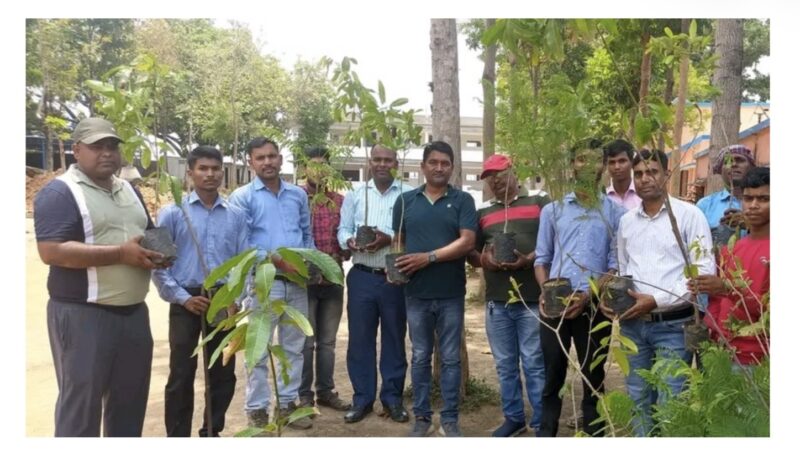
Environmentalists stress that governments alone cannot solve these challenges. Public participation remains essential. Simple actions such as conserving electricity, using water judiciously, reducing single-use plastics, segregating waste, planting trees, harvesting rainwater, and adopting sustainable consumption patterns can collectively create a substantial positive impact.
Experts further note that development and environmental protection should not be viewed as opposing goals. The principle of sustainable development demonstrates that economic progress can coexist with ecological preservation through clean technologies, renewable energy, biodiversity conservation, pollution control, and responsible resource management.
As the world marks World Environment Day 2026, citizens are being encouraged to transform environmental responsibility into a daily practice rather than a symbolic annual event. The message remains clear: every environmentally conscious decision made today contributes to a cleaner, greener, healthier, and more sustainable future.
“The Earth provides enough to satisfy every man’s needs, but not every man’s greed.”
With growing environmental concerns affecting communities worldwide, World Environment Day serves as a powerful reminder that protecting nature is not merely an obligation but an investment in the well-being and prosperity of future generations.