Vipin Gaur –
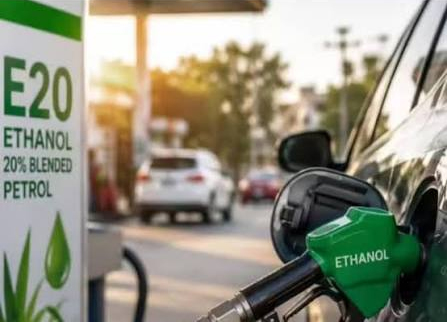
New Delhi: As India accelerates its transition towards cleaner fuels through the Ethanol Blended Petrol (EBP) Programme, the nationwide rollout of E20 petrol (20% ethanol blended with petrol) has become a landmark initiative aimed at reducing crude oil imports, lowering carbon emissions, and strengthening the country’s energy security. However, alongside its environmental and economic benefits, growing concerns are emerging over its impact on vehicle performance, fuel efficiency, maintenance costs, and consumer awareness.
The Government of India has promoted ethanol blending as a major step towards achieving energy independence while supporting farmers through increased demand for sugarcane and grain-based ethanol. Officials have stated that the programme has helped save thousands of crores in foreign exchange and reduced dependence on imported petroleum.
Despite these achievements, vehicle owners across the country have reported a noticeable decline in fuel efficiency after switching to higher ethanol blends. Automotive experts explain that ethanol contains significantly lower energy per litre than conventional petrol, resulting in reduced mileage. Industry estimates suggest that vehicles using E20 fuel may experience a decline of approximately 5–8 percent in fuel economy, depending on engine design and driving conditions.
Experts also warn that millions of petrol vehicles currently operating on Indian roads were manufactured before E20 compatibility became standard. Older vehicles may face several technical issues, including corrosion of fuel system components, deterioration of rubber hoses and seals, swelling of plastic parts, injector clogging, increased wear of fuel pumps, fuel leakage, and higher maintenance costs.
Another concern is ethanol’s tendency to absorb moisture from the atmosphere. This can lead to water contamination, corrosion inside fuel tanks, phase separation of fuel, reduced combustion efficiency, engine hesitation, and difficulties during long-term fuel storage.
Mechanics have observed that owners of older motorcycles, scooters, and passenger vehicles may need more frequent servicing of fuel filters, injectors, fuel lines, and seals. Some components may require replacement if they are not compatible with higher ethanol blends.
Although automobile manufacturers have started introducing E20-compatible vehicles equipped with ethanol-resistant fuel systems, millions of existing vehicles remain dependent on older technology. Consumer organisations argue that the transition has created uncertainty among vehicle owners who are unsure whether their vehicles are fully compatible with the new fuel.
Questions Being Raised Before the Government
As the implementation of E20 expands, consumers and automobile experts are raising several important questions before the Government of India and the Union Minister for Petroleum and Natural Gas:
- If ethanol-blended petrol reduces vehicle mileage, why are consumers paying nearly the same retail price as conventional petrol?
- What measures are being taken to compensate vehicle owners who experience higher fuel consumption?
- Has the Government conducted an independent nationwide study on the long-term impact of E20 fuel on vehicles manufactured before E20 compatibility standards?
- Will financial assistance or incentives be provided to owners of older vehicles that require modifications or replacement of fuel system components?
- Why has a nationwide consumer awareness campaign not been undertaken to clearly identify which vehicles are compatible with E20 fuel?
- Are oil marketing companies and automobile manufacturers jointly responsible for educating consumers about the risks and limitations of higher ethanol blends?
- Has the Government established a mechanism to address complaints from consumers who believe their vehicles have been adversely affected by ethanol-blended fuel?
- What safeguards are in place to ensure that fuel quality and ethanol blending standards remain uniform across the country?
Industry experts believe that while ethanol blending is an important environmental initiative, its implementation must also safeguard consumer interests. They emphasise that transparency, scientific research, and public awareness are essential for the programme’s long-term success.
Environmental experts continue to support ethanol as a renewable fuel capable of reducing greenhouse gas emissions and improving India’s energy security. However, they also stress that technological upgrades, vehicle compatibility, and infrastructure development must progress alongside fuel policy reforms.
As India moves towards a cleaner energy future, the success of the ethanol blending programme will ultimately depend on balancing environmental goals with consumer confidence, vehicle reliability, and economic affordability. The Government’s response to these emerging concerns will play a crucial role in determining public acceptance of one of India’s most significant fuel policy reforms.