Vinod M Jain
A precious moment of my life.
*”Prayed to Goddess Chamundeshwari for good rainfall and crops in the state”.
*May Goddess Chamundeshwari’s blessings be upon all the people of the state, and may everyone’s life prosper.
*All states should live in harmony like brothers.
“On the occasion of the state festival Dasara, hatred should recede and harmony should grow.Our resolve is that the light of development must reach every single home. Injustice must be erased, and equality must shine.
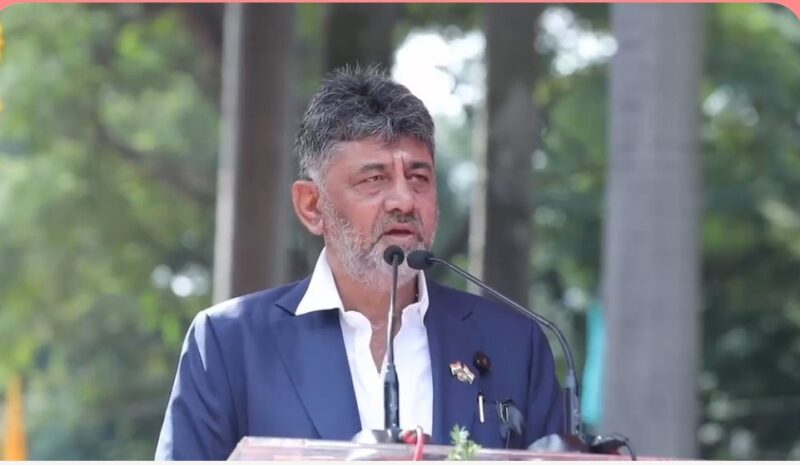
Hardships should melt away. The lives of farmers and youth should brighten,” stated CM D.K. Shivakumar.
Shivakumar responded to the media on Wednesday after performing the Nandi Dhwaja Puja in Mysuru and near the Mysuru airport earlier in the day.
A precious moment of my life:
“Today, after performing the Nandi Puja, we launched the Dasara Jamboo Savari.Today is a precious moment of my life.
As a Prajasevaka of the state,I and my colleagues have taken part in this historic moment.With the blessings of the people of the state, we got the opportunity to witness the procession of Goddess Chamundeshwari, the deity of power.
I bow at the feet of Goddess Chamundeshwari and pray that the people of the state,who gave us this opportunity, attain peace,happiness,and contentment,”he said.
“The Seer of Koppal inaugurated Dasara and extended his best wishes.We have prayed to Goddess Chamundeshwari for good rainfall and crops in the state.
Every day,lakhs of people are taking in this grand spectacle. Mother’s blessing is the strength of us all; service to the people is our devotion,”he said.
“This is not a Dasara belonging to the government or the royal family alone. Since the advent of democracy, it is everyone’s festival.
The respect due to the royal family will be accorded. Priority has been given to art, literature, and culture. We are committed to the development of the Kannada land. Chief Ministers from neighboring states have taken part in this historic event.
Film actors and soldiers safeguarding the nation have participated. As a public servant of the state, I wish that the blessings of Goddess Chamundeshwari be upon all the people of the state, and that everyone’s life becomes prosperous.
Today, Goddess Chamundeshwari will be carried in procession on the new elephant, Prashantha. May that elephant have the fortune of carrying the Goddess in procession for decades to come,” he wished.
All states should live in harmony like brothers:
When asked if the visit of Chief Ministers from neighboring states would enhance harmony between the states,he said, “Harmony will definitely build.
There are people here who speakTelugu,Malayalam,and Tamil.The Cauvery water flows and reaches all these states.These states should live in harmony like brothers.
Tableaux from neighboring states have also arrived here. Our state is attracting the entire world, and in Bengaluru, 45 lakh people are from other states.
We welcome everyone.Dasara is world-renowned, and people have come from abroad too. 13 foreign ambassadors have arrived for Dasara. A special grandeur has been added to this Dasara.”
Earlier, responding to the media at the Mysuru airport, the Chief Minister said,”Young men and women have made reels and introduced Dasara to the entire country.
Information has been received that many people who have arrived to view Dasara are not getting rooms. Rooms are full everywhere.
Our police department is working efficiently to ensure there is no traffic congestion anywhere.”
“Our public representatives and officials have informed that the Air Show and Kambala went very well.
Everyone’s cooperation is crucial for success.Watch the upcoming programs and share your feedback. May Dasara bring good things to media representatives. Your cooperation is very important for this,he said.