Rajagopal P Swamy (Special Correspondent)
A profound wave of political and civic friction has erupted across the Union Territory following a special narration titled “Modi’s Mindset” by Puducherry Lieutenant Governor Thiru.K.Kailashnathan.
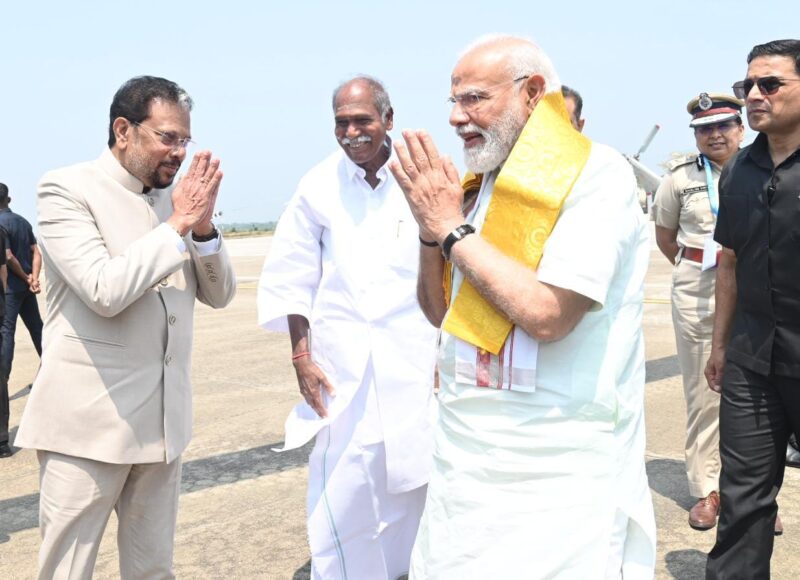
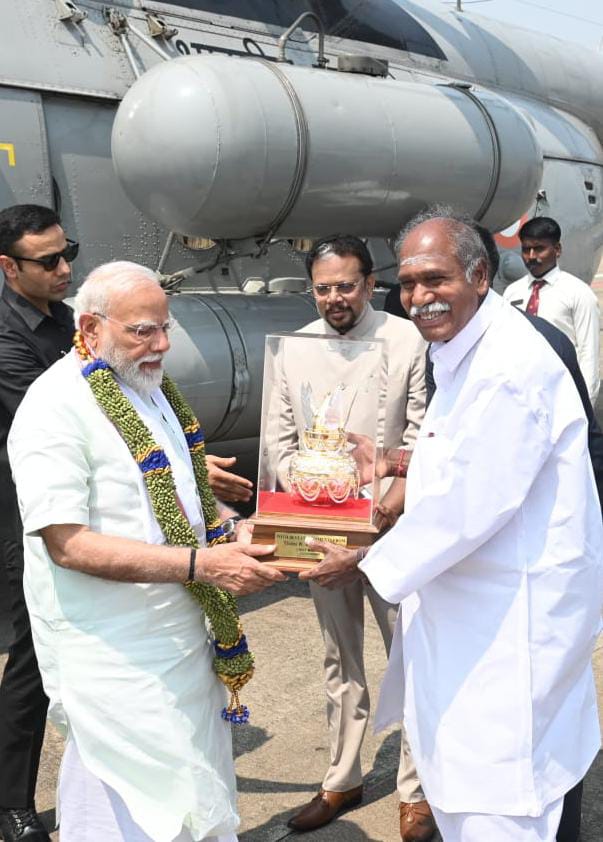
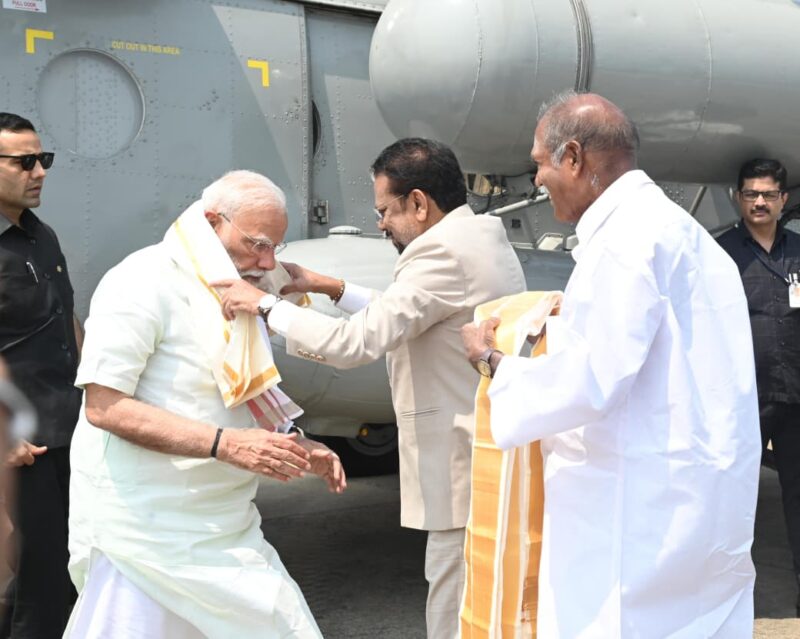
Special address for the complition of Prime Minister’s 12 years tenure,during the Prakruthi Yatra,the piece features iconic anecdotes from the “Gujarat Model” highlighting 24-hour rural electricity grids,the massive Statue of Unity, and the nationwide Vande Bharat rail network to praise the Prime Minister’s governance.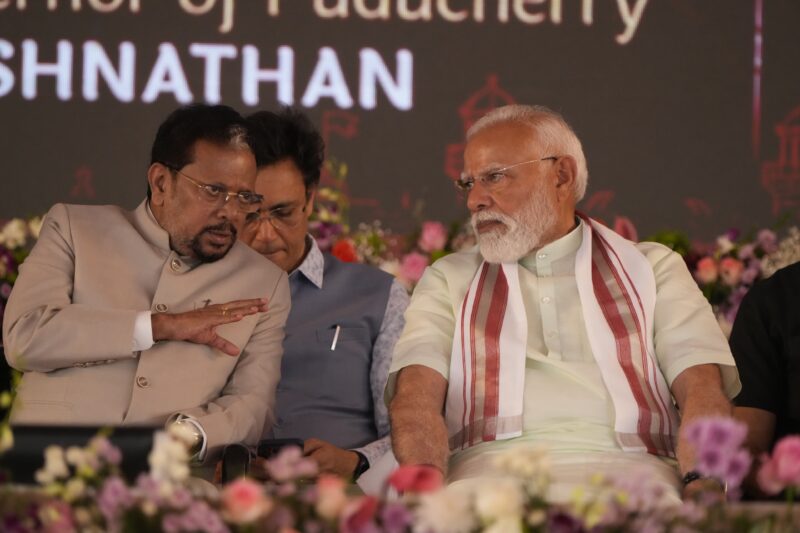
However,local residents and political analysts are viewing the essay through a far more cynical lens.
To critics,the publication reads like a tactical demonstration of “His Master’s Voice,”showcasing how veteran administrators use high-profile national narratives to secure political longevity while the territory they actually govern sinks into administrative paralysis.
While the Lieutenant Governor champions the Prime Minister’s ruthless efficiency in executing massive infrastructure visions,the situation on the ground in Puducherry tells a starkly different story.
Despite substantial central funding allocations, critical development initiatives remain chronically stalled or abandoned.
Foundational urban upgrades,modern drainage revamps, and sewage management systems under the Smart City initiative remain severely delayed, leaving the town highly vulnerable to heavy monsoon inundation.
Long-standing promises to transform the Puducherry port into a thriving commercial or cruise tourism hub are trapped in environmental clearances and bureaucratic loops.
Proposals for an IT and high-tech manufacturing corridor to address youth unemployment have seen negligible progress.
Furthermore,unlike Gujarat’s corporate-backed financial autonomy, Puducherry remains heavily dependent on central financial permissions,with administrative infighting frequently delaying vital state welfare payouts.
Political analyst S.Jean-Baptiste weighed in on the situation, noting that this is a classic case of top-level officials keeping the high command happy with flattering rhetoric while the everyday citizen pays the price for their administrative inertia.
The administrative inertia is most visible in the worsening traffic choke points plaguing the Union Territory.Widespread bottlenecks around major signals have turned daily commutes into exhausting logjams.
The Kamaraj Salai stretch near the Rajiv Gandhi Square has become a particular nightmare for commuters, where crossing from Anandaranga Pillai Nagar to the square takes a minimum of 20 minutes during peak evening hours.
The situation is equally grim along the Puducherry-Cuddalore Road, where a massive influx of heavy traffic competes with the stretch’s limited carrying capacity, and at the Shivaji Statue Junction on the ECR, forcing frustrated residents to take lengthy detours through local neighborhoods.
While the police have deployed up to 74 personnel on weekends,authorities acknowledge that manpower alone is inadequate due to rapid vehicular growth, unfamiliar tourists,and haphazard parking.
In an effort to find a remedy, the Traffic Police collaborated with Bengaluru-based consultancy firm Arcadis to analyze junction performance and infrastructure deficiencies, submitting comprehensive road engineering recommendations to the Public Works Department.
Providing a glimmer of hope,PWD Secretary A. Muthamma confirmed that a tripartite agreement was signed month of June, with M/S T and T Infra Limited and Dhariwal Buildtech Limited to construct a grade separator connecting the Rajiv Gandhi and Indira Gandhi squares.
Work is expected to commence within two months following soil testing and final formalities,which authorities promise will eventually free the two major signals from chronic congestion.
For the public,however,the grade separator agreement is a small band-aid on a long trail of broken manifesto commitments and high-profile promises featured in the ruling party’s election manifesto that remain entirely on paper.
A key promise to celebrate the Union Territory’s rich cultural and literary heritage by erecting a grand 150-foot statue of legendary poet Mahakavi Subramania Bharati on the beachfront has seen zero physical progress.
Similarly,comprehensive plans to establish a Temple Restoration Fund, completely remove encroachments on temple lands,and revitalize the ancient Arikamedu Archaeological site remain unfulfilled.
On the economic front,commitments to build dedicated IT parks and modern textile parks to generate over 2.5 lakh job opportunities for local youth continue to face severe delays.
Regional connectivity upgrades are lagging significantly behind schedule as well,including the comprehensive upgrading of the Puducherry airport and a critical elevated rail line connecting Puducherry to Chennai via Mamallapuram that has been pending for the past 20 years.
Locals and political observers attribute these systemic delays to an increasingly rigid, rule-bound framework at Raj Nivas.
Critics argue that instead of fast-tracking essential public works, the current administration fosters bureaucratic friction with the elected government, leaving key policy clearances,city-planning measures, and departmental transfers bottlenecked in files. As the political discourse intensifies, the spotlight has firmly shifted to the performance of Raj Nivas itself.
For the people of Puducherry,the true measure of an administrator’s competence cannot be measured by how eloquently they praise the “Gujarat Model,” but rather by their willingness to fix the broken machinery of the Union Territory they have been assigned to lead.