Rajagopal P Swamy (Special Correspondent)
The shift in Puducherry has indeed sent ripples through the political corridors of Tamil Nadu, turning Vijay and the TVK into a genuine FEAR FACTOR for the ruling DMK in Tamilnadu.
Recent surveys, including the IPDS Opinion Poll and C-Voter trackers as of April 2026, suggest that the TVK is no longer just a “fan club party” but a potent third force that could dismantle traditional seat-sharing arithmetic.
The “Fear Factor” for the DMK:
The DMK’s concern stems from where the TVK is drawing its strength. While the AIADMK is losing its traditional anti-incumbency vote to Vijay, the DMK is facing a direct threat in three critical areas:
1.The “First-Time Voter” Monopoly:For decades, the DMK (especially through Udhayanidhi Stalin) has targeted the youth. However, current data suggests that 60% to 70% of first-time voters are leaning toward Vijay.This “youth surge” is viewed as a direct challenge to the DMK’s future-proofing strategy.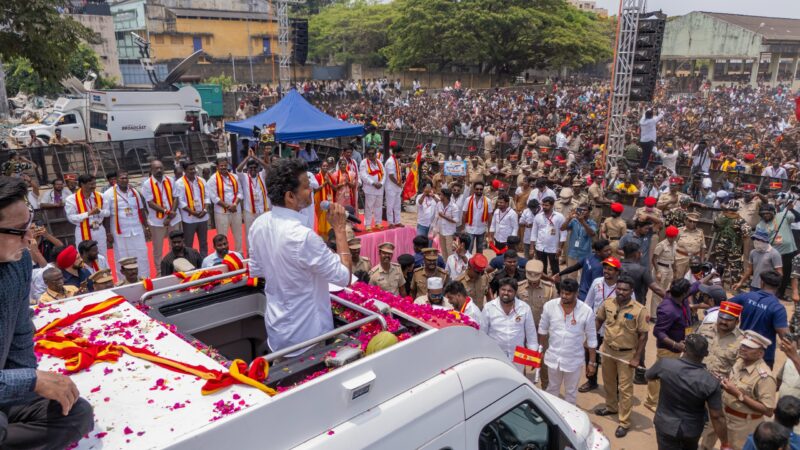

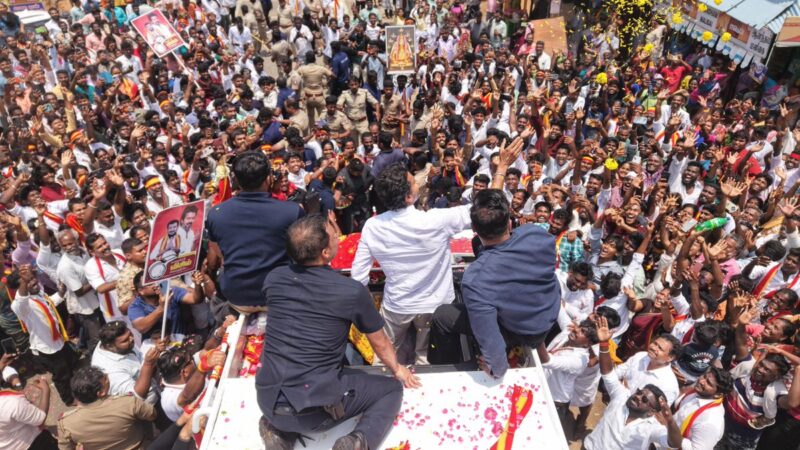



2.The Minority Shift:Historically, the DMK-Congress alliance has been the default choice for Christian and Muslim voters in TN to counter the BJP.
The Puducherry results—where nearly 70% of Christian youth reportedly backed TVK—show that these communities are willing to experiment with a “secular alternative” that isn’t the DMK.
3.Anti-Incumbency Vacuum:Usually, when voters are unhappy with the ruling government, the vote shifts to the main opposition (AIADMK).
However,C-Voter analysis indicates that Vijay is capturing a significant portion of this “dissatisfaction vote,” preventing the DMK from benefiting from a fragmented opposition.
C-Voter’s “Massive Change”Analysis;
C-Voter has specifically flagged the 14% vote share threshold.In a first-past-the-post system like India’s, a 14% shift is often described as a “tectonic” movement:
The Kingmaker Scenario:If TVK holds 14% of the total vote, it could lead to a hung assembly where neither the DMK nor the AIADMK alliance hits the 118-seat majority mark.
Marginal Losses:In at least 60–80 constituencies, the victory margin is often less than 5,000 votes. If TVK peels away even 10,000 “neutral” votes in these seats, it could cause the ruling DMK to lose dozens of seats they previously held by a narrow margin.
The 20% “Breakout” Warning:C-Voter analysts suggest that if Vijay’s momentum pushes that 14% toward 20%, the TVK will transition from a “vote-cutter” to a “seat-winner,” potentially becoming the second-largest party in the state.
Current Political Friction (April 2026):
The rivalry has become personal and aggressive.DMK leaders have recently labeled the TVK an “evil force” or a “proxy for others” to discredit its rise.
>Vijay is no longer just an actor appearing for a cameo; he is systematically eating into the DMK’s ideological base—the youth and the marginalized,”noted one recent political commentary in a leading English Daily.
The DMK government’s focus on massive welfare schemes and the “Dravidian Model”is now being pitted against Vijay’s promise of a “New Era” (Puthiya Paathai), creating a high-stakes battle for the heart of Tamilnadu.