
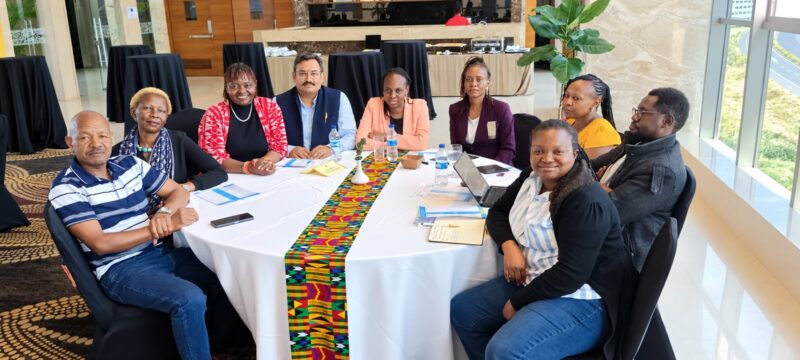
NAIROBI, Kenya: Dr. Vipin Gaur, General Secretary of the Newspaper Association of India (NAI), attended the National Conference on the Welfare of Journalists in Nairobi, where he engaged with Kenyan media professionals and discussed challenges affecting their working lives.
Gaur was invited to the conference by Winnie Kamau, Editor and Data Journalist at Talk Africa and President of the Association of Freelance Journalists (AFJ), Kenya. During his visit, he met journalists and representatives of several media organisations, listening to concerns about pay, job security, workload and professional support.
The conference highlighted findings from the State of Journalists’ Welfare Survey, published by the Kenya Union of Journalists (KUJ) in collaboration with the Media Council of Kenya (MCK). The survey gathered responses from 120 media professionals across different roles and news organisations.

Survey highlights
The survey reported an average monthly income of KES 63,000 among respondents, while 52% said they earned less than KES 50,000. It also found that 48% had not received a pay review in more than three years and 82% did not receive allowances or bonuses.
Job security was another major concern: 55% of respondents said they worked without job security, including as correspondents, freelancers or contributors. More than 65% reported increased workloads over the previous five years without a corresponding pay increase.
The survey also highlighted mental health concerns. It reported that 65% of respondents experienced depressive symptoms, while only 25% had sought professional mental health support. The findings further indicated that 89% were actively looking for work outside their current workplace and around one-third were considering leaving journalism altogether.
Calls for stronger journalist welfare
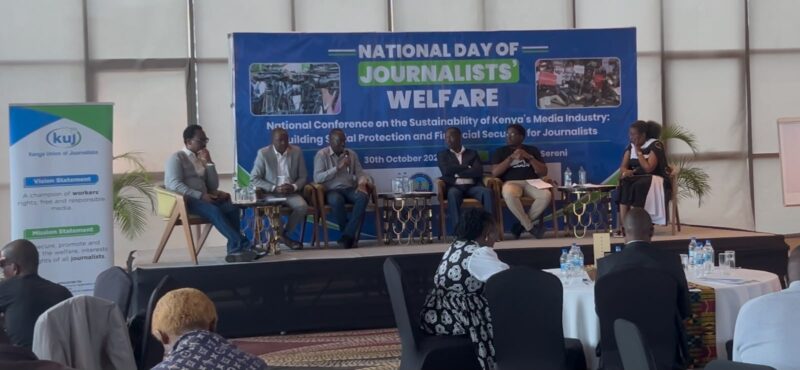
The conference featured calls for stronger protections and practical measures to improve journalists’ working conditions. KUJ Secretary-General Eric Oduor said journalists’ welfare affects their ability to fulfil their watchdog role and serve the public. MCK Chief Executive Officer David Omwoyo said the survey could help support a more informed, industry-wide discussion.
Principal Secretary for MSME Development Susan Mang’eni highlighted the connection between journalists’ welfare and the wider economy. James Ratemo, Head of Corporate Communications at the Retirement Benefits Authority (RBA), encouraged journalists to begin saving early, even on modest incomes.
The RBA also pledged to support KUJ in establishing a press pension scheme for non-permanent journalists, including freelancers and correspondents.
Building dialogue across borders
During discussions with Kenyan media associations, Gaur said that some of the challenges raised at the conference were also familiar in India. He said the Newspaper Association of India had been organising programmes and initiatives to address issues affecting journalists.
Gaur also acknowledged the changes introduced in India’s media sector under Prime Minister Narendra Modi and said these had brought various facilities and support for journalists. He expressed hope that further measures would continue to strengthen the media sector.
Referring to journalist safety, Gaur said that the enactment of a Journalist Protection Law in India would be a historic step for the country’s media professionals. He praised Prime Minister Modi and expressed confidence that the government would take steps it considered beneficial for India’s media and journalists.
Gaur’s meetings with Kenyan journalists and media representatives provided an opportunity to hear directly about their professional concerns and exchange views on journalist welfare. The conference underscored the importance of continued dialogue among journalists’ associations, media organisations and relevant institutions.
The survey findings and statements in this report are attributed to the conference material and speakers. Gaur’s comments reflect his views. The survey findings reflect respondents’ reported experiences and should not be taken as findings about every journalist in Kenya.


