Binish Thomas (Special Correspondent)
The Election Commission of India is not supposed to work for a political party. It is not supposed to work for a government.And it certainly is not supposed to work for an individual politician.
Its responsibility is to something much larger: the voter.
That is why the latest revelations about what has been happening inside India’s three-member Election Commission are so significant.
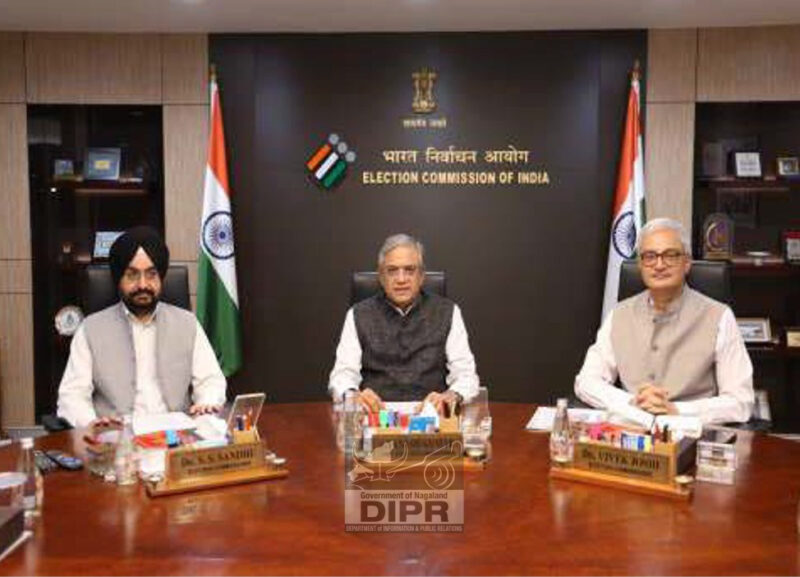
An investigation by The local Newspaper has revealed that Election Commissioners Sukhbir Singh Sandhu and Vivek Joshi formally objected at least 14 times over 10 months to decisions and actions they said were taken without their knowledge.
Their concerns touched some of the most sensitive parts of India’s electoral machinery – adding new voters, deleting and restoring names, the functioning of the electoral-roll database and the security and control of the technology behind the voters’ list.
At the centre of these questions is Chief Election Commissioner Gyanesh Kumar, who took charge as India’s 26th CEC on February 19, 2025.
The Election Commission itself describes the institution as an autonomous constitutional authority responsible for administering elections in India.
The issue, therefore, is bigger than one individual. It is about whether the institution entrusted with protecting the voter’s right to choose is itself operating with the transparency, checks and internal safeguards that democracy demands.
When Two Election Commissioners Raise Objections :
The most striking aspect of the Newspapers article says investigation is not that there were disagreements inside the Election Commission.
Disagreements can happen in any constitutional institution. It is that two of the three commissioners reportedly put their objections on record repeatedly.
In one case, Sandhu reportedly described an action as “unauthorised and illegal” and called for it to be removed. The concerns were not merely about administrative procedure.
They went to the heart of the question: Who controls the voter database, and who has the final say when the system determines whether a citizen’s name appears on the electoral roll?.
The Form That Determines Who Becomes a Voter :
One of the disputes concerned Form 6, the form through which an eligible citizen applies to become a voter. In July 2026, a new declaration was added to the form asking applicants whether their name, or the name of a parent or grandparent, appeared in the electoral roll of the last Special Intensive Revision.
The local paper representative reported that internal records showed both Joshi and Sandhu had raised objections in May, arguing that the change could not be made without an amendment to the relevant electoral rules.
Despite those objections, the change was introduced. On August 13, Sandhu reportedly recorded that the change was “unauthorised and illegal” and should be removed. This raises an uncomfortable question.
If the rules governing voter registration are changed without the agreement of all members of the constitutional body responsible for elections, what safeguards prevent an administrative decision from becoming a political or electoral consequence?.
A voter registration form may appear to be a routine piece of bureaucracy. It is not. It is the gateway through which a citizen enters the electoral system.
When Technology Becomes the Gatekeeper :
The second major concern is even more consequential.
India’s electoral system has traditionally been decentralized.
Electoral Registration Officers, or EROs, at the constituency level are responsible for preparing and maintaining electoral rolls.
But according to the newspaper reports investigation, the two Election Commissioners raised concerns about the “gradual centralization” of the electoral-roll database through the Election Commission’s technology systems.
The concern was that officials responsible under law for updating voter records could find themselves unable to carry out those functions because the software controlled from the Commission’s headquarters in Delhi restricted what they could do.
The newspaper cited a case in Goa in which 97 people had reportedly been found eligible by the relevant Electoral Registration Officer but could not have the decisions properly recorded because of software-related restrictions.
That creates a fundamental problem. A citizen may produce the required documents. An officer legally authorised to examine those documents may determine that the citizen is eligible.
But what happens if the computer system does not allow that decision to be entered?.
Who then has the final word?.
The officer appointed under the law, or the software?.
That is not merely a technology question.
It is a democratic question.
The Cabinet Secretary Gets Involved :
The concerns became serious enough for Sandhu and Joshi to take an unusual step.
They separately wrote to Cabinet Secretary T. V. Somanathan, the country’s senior-most civil servant, over changes to the allocation of work that, according to the newspaper, affected oversight of the technology supporting electoral rolls.
The two commissioners had previously raised concerns about the centralisation of access to the electoral database. Now they were taking those concerns outside the Election Commission.
That makes the episode particularly significant. The Election Commission is a constitutional authority designed to function independently in administering elections.
When two of its three members feel compelled to raise concerns about the functioning of its electoral technology with the Cabinet Secretary, the matter deserves public scrutiny.
Not because it automatically proves wrongdoing. But because the public has a right to know what happened.
What Does the Election Commission Say?:
The Commission has not denied the existence of the internal notes. Instead, its response has been that the notes were part of the normal decision-making process.
In a statement reported by The Newspaper, the ECI said that differing views and observations are a normal part of institutional deliberation and described the written notes, technical suggestions and internal checks as standard practices.
It also said that decisions taken by the Commission during the previous year, including electoral-roll revision and the Special Intensive Revision, were unanimous decisions of the full Commission.
That response is important. The existence of disagreement within an institution does not, by itself, establish that an election has been compromised or that any individual has acted illegally.
But the questions raised by the two commissioners remain questions that deserve answers.
Why were changes to Form 6 introduced despite objections recorded by two commissioners?.
Why were concerns raised about centralised access to the electoral-roll database?.
Why did the two commissioners believe it necessary to approach the Cabinet Secretary?.
And were the concerns they raised ultimately resolved?.
These are questions that cannot simply disappear behind the assertion that the final decisions were unanimous.
The Bigger Question Is Not Gyanesh Kumar :
Political parties have predictably entered the controversy.
Opposition leaders have accused the Election Commission of favouring the ruling establishment, while some have demanded Kumar’s removal or a wider investigation.
Those are political positions,not established findings. The more important issue for citizens lies elsewhere. The Election Commission belongs to neither the BJP nor the Congress nor any other political party.
Its constitutional responsibility is to administer elections and protect the integrity of the electoral process. That means the question should not simply be whether Gyanesh Kumar is loyal to one political party or another.
The question should be whether every decision taken under his leadership can withstand public, legal and institutional scrutiny. That is the standard any CEC should face.
Democracy Depends on More Than Election Day :
India’s democracy is often discussed in terms of polling day – queues outside polling booths, electronic voting machines, campaign speeches and counting of votes.
But an election begins much earlier. It begins with a name appearing on the electoral roll.
It begins when a first-time voter submits an application. It continues when an eligible citizen’s name is retained, when a wrongly deleted name is restored and when an officer is able to perform the function assigned to that officer under the law.
The integrity of that chain matters as much as what happens inside a polling booth. That is why the allegations and objections now emerging from inside the Election Commission deserve more than partisan shouting.
They deserve documentation. They deserve answers. And, where necessary, independent scrutiny.
Because the Election Commission is ultimately not accountable to the BJP, the Congress, the Opposition, the government of the day or even to the person occupying the office of Chief Election Commissioner.
It is accountable to the Constitution and to the people whose votes give India’s democracy its legitimacy.