
Dr.Thomas (Special Correspondent)
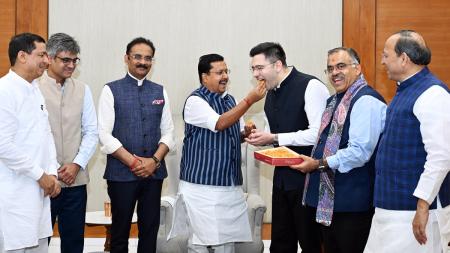
The split in the Aam Aadmi Party and the defection of seven MPs to the Bharatiya Janata Party is not just another case of political migration it is a shameful betrayal of public trust and a brutal exposure of AAP’s leadership failures.
The big question is: who is the real culprit?:
The answer is simple both the defectors and the party leadership are guilty,but the bigger blame lies with those who handed power to the wrong people.
This was clearly not an overnight decision.It appears to have been a well-planned political operation,prepared almost a year in advance.
Raghav Chadha’s silence in the Rajya Sabha was the first warning sign.For nearly one and a half years,he did not strongly criticize BJP policies in Parliament.
Even when Arvind Kejriwal came out of jail on bail,there was no visible support or public statement from him. These were not coincidences they were signs of political distancing and silent negotiation.
Yet AAP leadership failed to see it or ignored it:
This incident should be a wake-up call for every political party in India:stop rewarding outsiders and celebrities while ignoring the loyal workers who built the party from the ground up.
AAP made the disastrous mistake of sending people like Harbhajan Singh to the Rajya Sabha.On what basis? Popularity? Fame? Social media image?.
What exactly has he contributed to Parliament?.
How many serious questions has he raised?.
How often has he spoken for ordinary citizens?.
What has been his real attendance and performance?.
These are questions every citizen has the right to ask.
The reality is harsh:many celebrity MPs have treated Parliament as a status symbol rather than a constitutional responsibility.They enjoy the power, the prestige, and the privilege, but fail to deliver meaningful service to the people.
Some of these celebrity politicians are heroes only on screen. In films, they fight villains, carry weapons, and act fearless.But in real political life, they cannot even face public criticism.
One South Indian actor-turned-politician, who appears fearless in movies, reportedly ran back to his caravan when followers threw flower balls toward him.That contrast says everything about the seriousness with which some celebrities approach politics.
Raghav Chadha and the other MPs who joined BJP were not political giants before AAP gave them positions.
They were elevated by the party and sent to the Rajya Sabha through the votes of AAP MLAs.They were given a national platform to represent party ideology and the voices of common people.
And what did they do?.
They betrayed that trust for political convenience.
This is not ideological change.
This is not political evolution.
This is pure opportunism.
There are even rumours that investigative agencies were monitoring Ragav Chadha, and that joining BJP was a safe escape route.
Whether true or not, the public perception is clear power has become a marketplace, and loyalty is being traded for protection and position.
But the blame does not stop with the defectors.
AAP leadership must answer for this disaster.
Why were such crucial positions handed to people with no grassroots foundation?.
Why were loyal party workers ignored while privileged outsiders were rewarded?.
Why was personal fame valued over ideological commitment?.
This arrogance has cost the party dearly.
After coming to power, AAP slowly moved away from the “common man” politics it once preached. Leaders began giving more importance to bureaucrats and power structures than to the ordinary workers and citizens who built the movement. They forgot one fundamental truth:
Officers stand with power, but workers stand with ideology.
By ignoring its grassroots base, the party created space for betrayal.
Meanwhile, the Bharatiya Janata Party continues to operate like a relentless election machine. While other parties think only during election season, BJP plans every single day of the year.
Their eyes are now clearly on Punjab, and they are preparing far ahead while opponents remain distracted.
If political parties continue handing tickets and powerful positions to celebrities, opportunists, and defectors from rival camps, they will continue to suffer betrayal.
Leadership roles must go to those who have stood with the party in difficult times—not to those seeking status.
Reward loyalty, not fame. Reward commitment, not convenience.Reward ideology,not opportunism.
If parties fail to understand this, more betrayals will come.
And when they do,the blame will not lie only with those who jump it will lie with those who gave them the ladder.


