Pramesh S Jain
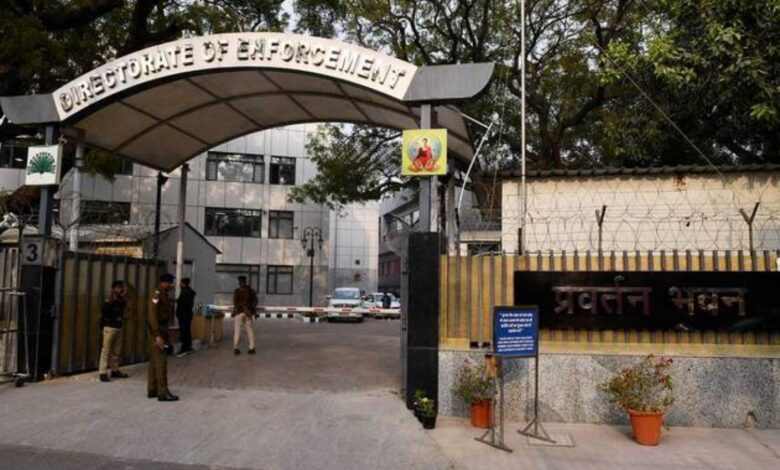
The Directorate of Enforcement (ED),Bengaluru Zonal Office,has secured the conviction of former Excise Department official M.Ramachandra and his daughter,R. Yurekha,in a money laundering case linked to a disproportionate assets investigation initiated by the Karnataka Lokayukta Police.
In its judgment dated October 14,2026,the Special Court for CBI cases in Bengaluru sentenced Ramachandra to five years of rigorous imprisonment and imposed a fine of Rs.5 lakh.
His daughter Yurekha was sentenced to three years of rigorous imprisonment and fined ₹3 lakh under the Prevention of Money Laundering Act (PMLA), 2002.
The court also held five immovable properties liable for confiscation to the Central Government.In a further development, the court,acting on an application by the ED concerning a defence witness,directed the initiation of perjury proceedings against him.
The case originated from an FIR registered by the Karnataka Lokayukta Police in July 2009 under the Prevention of Corruption Act,following allegations that Ramachandra had amassed assets disproportionate to his known sources of income.
According to the prosecution,the Lokayukta investigation estimated his disproportionate assets at ₹1.79 crore during the check period from July 1,1977, to July 8, 2009.
Based on the FIR,the ED registered an Enforcement Case Information Report (ECIR) on October 26, 2009,and initiated a money laundering investigation.
The ED alleged that funds generated through the underlying criminal activity were channelled into properties and other investments,including assets held in the names of family members.
The investigation examined financial transactions involving Ramachandra and his daughter, including those linked to Kwality Wine Centre in Bengaluru.
The court proceedings culminated in the conviction of both accused under the PMLA.
The confiscation order concerning five immovable properties marks a further consequence of the case, while the direction to initiate perjury proceedings against the defence witness adds another dimension to the judgment.