Vinod M Jain
*Time-bound processing,deemed approvals,paperless payments and public tracking of works to bring greater transparency and accountability.
*End-to-end digital tracking of works, direct contractor payments and fixed timelines to reduce delays and strengthen accountability.
*Bills to move through defined timelines with deemed approvals,recorded reasons for rejection and real-time monitoring of works.
*Five City Corporations to follow a uniform system for bill processing,contract monitoring,quality control and payments.
*Reforms aim to reduce procedural delays,fix responsibility,improve ease of doing business and strengthen quality of public works.
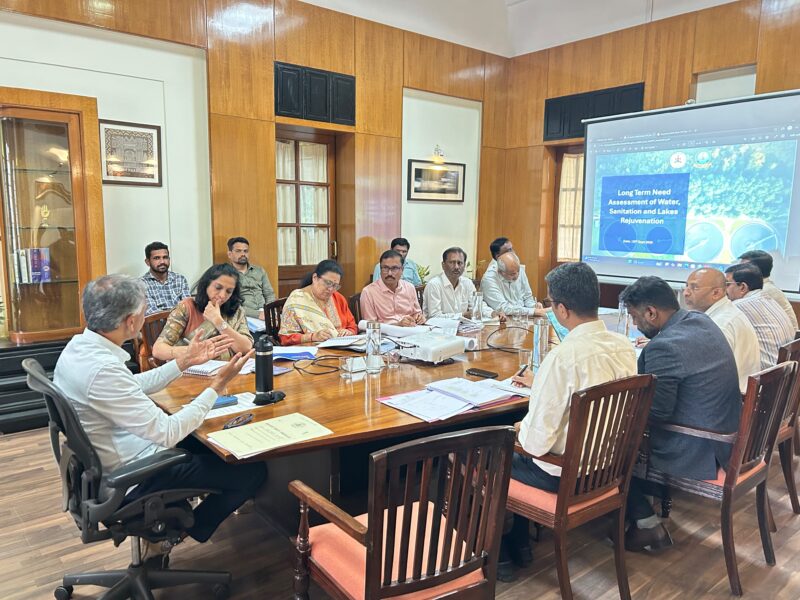
The Bengaluru Development Minister Krishna Byre Gowda instructed officers to initiate a series of reforms aimed at making the processing and payment of contractor bills faster,more transparent,and more accountable.
The reforms will apply uniformly to works funded through Government grants as well as those funded from the Corporations’ own resources.
The reforms are aimed at addressing a long-standing concern in the execution of public works delays and uncertainty in the processing and settlement of contractor bills.
The new system seeks to replace multiple layers of manual processing with a streamlined, digital and time-bound system, with clear responsibility at every stage and greater transparency in the movement of bills.
The objective is not merely to accelerate payments, but to establish a predictable and accountable works payment system across Bengaluru’s five City Corporations, while strengthening quality control, contract monitoring and financial oversight.
Faster,Simplified Bill Processing:
Under the new system,work bills will move through a streamlined approval chain within the Integrated Financial Management System (IFMS).
Each bill will be scrutinised by the Project Management Consultant (PMC),verified and certified by field Engineers,pre-audited and approved by the Chief Engineer before being processed for payment in order of seniority.
The streamlined process will reduce the number of approval levels involved and minimise avoidable movement and delays in bill processing.
Direct,Paperless Payments:
Payments to contractors will be credited directly to their registered bank accounts through IFMS using OTP-based authentication,eliminating manual RTGS transactions altogether.
This will make the payment process more secure, transparent and traceable,while reducing manual intervention.
Time-Bound Clearances with Deemed Approval:
Every stage of bill processing,including PMC scrutiny and Quality Control checks,will have a prescribed time limit.
For instance,field Engineers will have seven days for verification and certification.If an officer or agency fails to act within the prescribed time,the bill will be deemed approved and automatically move to the next level.
At the same time,the system will make responsibility explicit.If an officer or agency fails to take corrective action within the prescribed period and any irregularity is subsequently established,responsibility will be fixed for the failure to act.
Bills can be withheld or rejected only with recorded reasons in the system.This safeguard will be built directly into the IFMS software,reducing unnecessary delays and giving contractors greater clarity on the status and reasons for any hold or rejection.
From Work Award to Final Payment – Integrated Contract Monitoring:
Contract management and monitoring of works will be brought onto the IFMS platform,enabling every work to be tracked through a single integrated system — from award and execution to bill processing and final payment.
This will provide a common digital trail for the entire lifecycle of a public work and strengthen accountability at every stage.
Bills to Be Linked to Actual Progress on Ground:
Technical oversight will also be strengthened. Engineers will be required to record the physical progress of every work in the Real-time Information Monitoring System (RIMS),and bill processing will be linked to the progress recorded in the system.
The PMC will scrutinise every bill on priority before it reaches Corporation Engineers,who will certify compliance with Quality Control observations.
In another measure aimed at reducing procedural delays,Final Security Deposit (FSD) payments will now be released directly at the level of the Executive Engineer of the concerned Division,without requiring a separate reference to the DCF and Commissioner.
Greater Transparency at Every Worksite:
The name of the Engineer in charge and the Contractor responsible for every work will be displayed at the worksite and officially recorded.
A public dashboard will also be launched, enabling citizens to track the real-time status of ongoing and completed public works undertaken by the Corporations.
The move is intended to bring greater public visibility to works being undertaken across the city-including who is responsible for the work,its status and its progress.
New Internal Audit Wing for Stronger Financial Oversight:
To further strengthen financial oversight, an Internal Audit Wing will be established within the Greater Bengaluru Authority (GBA)/the Corporations.
The new wing will conduct periodic internal audits, supplementing the existing annual audit conducted by the Chief Auditor,GBA,and provide an additional layer of financial scrutiny and accountability.
A System Shift in Public Works Management:
The reforms mark a significant shift in the way public works are processed, monitored and paid for across Bengaluru’s five City Corporations.
By bringing bill processing,contract management, physical progress,quality control,payments and audit within a more integrated and digitally tracked framework, GBA aims to reduce delays, improve transparency and fix responsibility at every stage.
The reforms are also intended to provide well-meaning contractors with a more predictable and transparent system,enabling them to focus on executing quality works rather than navigating multiple procedural layers for payment.
The initiative is part of GBA’s broader effort to improve governance,strengthen accountability,ease the process of doing business with the government and improve the quality and timely execution of public works across Bengaluru.