Dr.Thomas (Special Correspondent)
When Indian Prime Minister Narendra Modi visited the countries of Denmark and Norway, several notable incidents attracted international attention.
During the visit, concerns were reportedly raised regarding press freedom in India and a few other democratic issues.
In one press interaction, the Prime Minister did not respond to a journalist’s question, which once again sparked debate about the relationship between the government and the media.
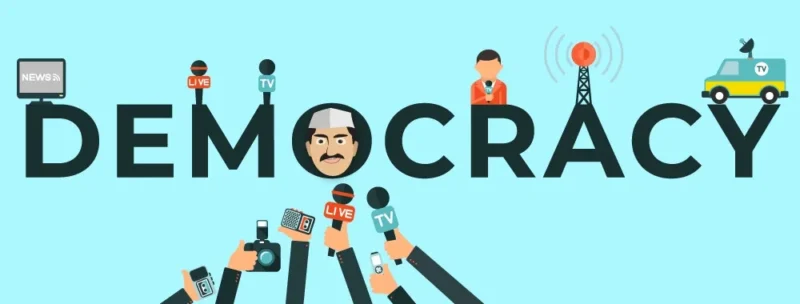
In any democracy, questions from journalists are important because the media acts as a bridge between the government and the people.
Many citizens believe that elected leaders should openly address critical questions instead of avoiding them. A free and fearless press is considered one of the strongest pillars of democracy.
India has a proud history of respected leaders representing the nation on the global stage. Former President A.P.J.Abdul Kalam delivered a memorable speech at the European Parliament, where he reportedly received a standing ovation and appreciation for presenting India as a nation of knowledge, peace, and inclusiveness.
Similarly, former Prime Minister Manmohan Singh faced heavy criticism during his tenure, especially over issues such as fuel prices, LPG cylinder costs, inflation, and the falling value of the Indian Rupee against the US Dollar.
At that time, one of his major critics was Narendra Modi, who was then serving as the Chief Minister of Gujarat.
However, critics now point out that after Narendra Modi became Prime Minister, prices of fuel and essential commodities continued to rise, and the value of the Rupee against the Dollar also weakened further.
Many people question why fuel prices increased even during periods when international crude oil prices were comparatively low.
Supporters of the current government, on the other hand, argue that inflation management and infrastructure growth under the Modi government have been stronger compared to previous administrations.
Another growing concern among sections of society is media independence in India.
Many people believe that several major media outlets are influenced by large corporate groups that are seen as close to the government.
Because of this perception, critics argue that negative news against the ruling establishment often receives limited attention.
There have also been debates regarding freedom of expression in India.
Cartoonists, activists, and stand-up comedians have at times faced police cases, summons, or legal action over content critical of the government or political leaders.
Such incidents raise questions about the space available for dissent and criticism in a democratic society.
Media freedom is not an enemy of government; rather, it strengthens democracy by ensuring accountability and transparency.
Journalists asking difficult questions should not be viewed as anti-national or anti-government. Public leaders are expected to answer criticism with openness and confidence.
India is a diverse country with people belonging to different religions, castes, cultures, and beliefs. The strength of the nation lies in its unity and inclusiveness.
Many citizens believe that governments should focus more on development, employment, education, healthcare, and economic growth rather than divisions based on religion or ideology.
India has always been admired for its pluralism, tolerance, and democratic traditions. Preserving freedom of speech and press freedom will only strengthen the country’s global image as the world’s largest democracy.