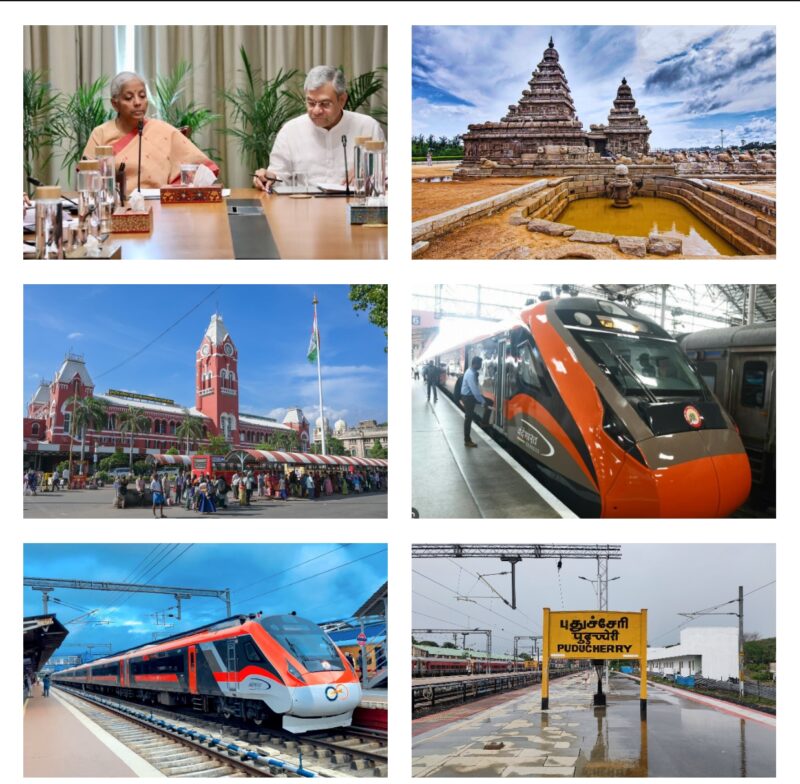
Rajagopal P Swamy,(Special Correspondent)
*How Fast-Tracking the Chennai–Puducherry Rail Project Will Spark a Multi-Billion Rupee Economic Boom.
While the Southern Railway proudly rolls out massive budgetary layouts for internal double-tracking, four-laning,and high-speed corridors radiating from northern Chennai,a critical 180-kilometer lifeline closer to the southeastern coast continues to languish under layers of bureaucratic dust and historic political indifference.
The Chennai–Mamallapuram–Puducherry–Cuddalore East Coast Road Railway Project, first sanctioned in the 2008–2009 Union Budget,remains one of the most glaring symbols of infrastructure stagnation in southern India.
For nearly two decades,commuters,local trade associations,small-scale vendors,and international tourism stakeholders have witnessed a persistent blame-game over land allocation costs and alignment revisions.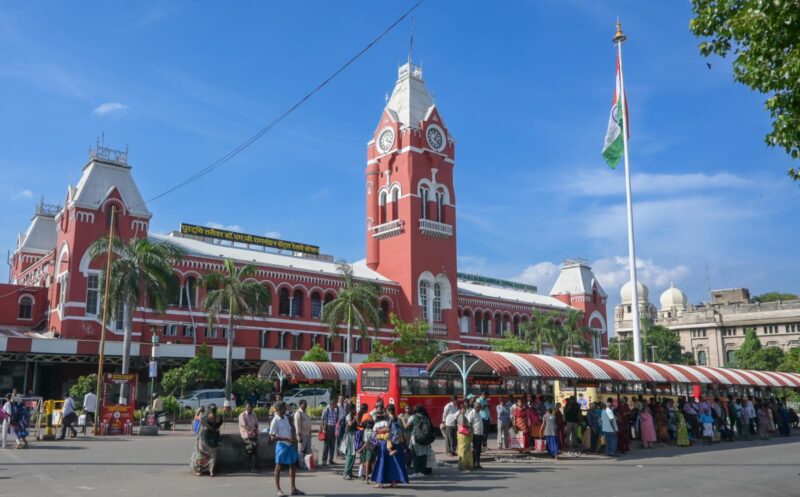
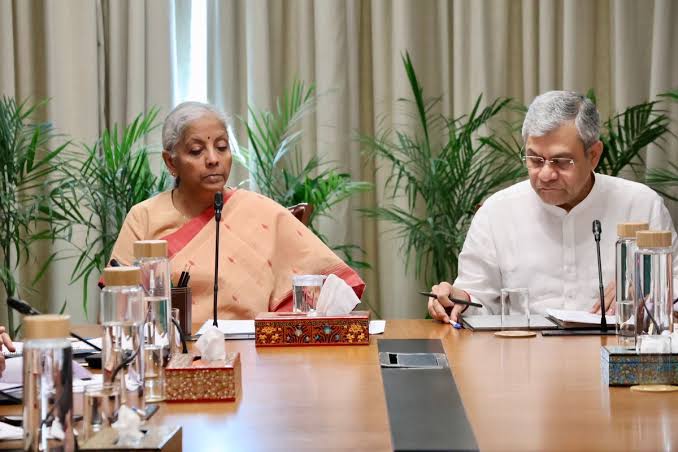

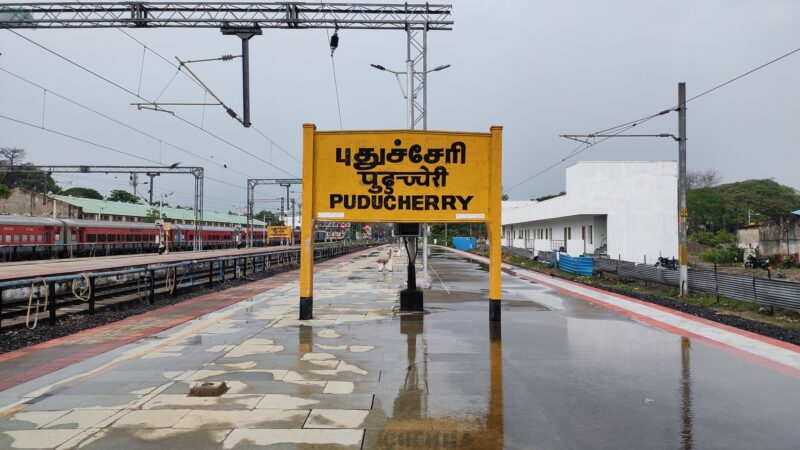
Recently,the Railway Board officially defreezed the project from abeyance,signaling a technical awakening.
However,without immediate,aggressive operational intervention by the Union Government in tandem with the Tamilnadu and Puducherry administrations,this crucial alignment risks returning to deep freeze,denying both regions a powerful socio-economic multiplier.
The anatomy of this decadelong delay reveals a textbook case of federal-state friction.Following its inclusion in the budget nearly twenty years ago,progress ground to a halt as structural changes were demanded.
The Government of Puducherry originally sought modifications to loop the alignment closer to existing local tracks, alongside an additional demand for immediate double-tracking.
The Ministry of Railways countered by requesting the regional governments to bear fifty percent of the escalated costs and provide premium coastal land free of charge.
With neither side willing to absorb the immediate financial shock,funds allocated in subsequent fiscal cycles were repeatedly returned unspent.
Just last year,an allocation of over fifty crores for the corridor had to be surrendered because administrative clearances remained jammed.
This persistent deadlock has left the coastal population entirely dependent on the highly congested East Coast Road highway network,ignoring the massive,eco-friendly mass-transit potential of a dedicated rail corridor.
The demographic profile of the Chennai-Puducherry transit corridor has fundamentally evolved over the last decade,as the East Coast Road is no longer merely a weekend getaway route but a dense, daily commuter channel.
Thousands of professionals,tech workers heading to southern Chennai’s IT hubs,students traveling to central educational institutions,and healthcare seekers commuting to Puducherry’s premier medical institutes rely entirely on public buses or private vehicles.
The absence of a rail link has forced a heavy volume of passenger traffic onto the highways,leading to highly volatile traffic conditions and an escalation in road accidents along the highway’s winding coastal curves.
Introducing a dedicated passenger and suburban rail link will drastically de-congest the road networks, drop transit times between Chennai and Puducherry to under two hours,and provide a secure,low-cost transit alternative for senior citizens,patients,and regular daily-wage commuters.
Beyond passenger transit,the East Coast Road rail line holds the key to revitalizing the region’s decentralized agrarian and maritime micro-economies.
The coastal stretches of Marakkanam,Cheyyur,and the rural pockets bordering Puducherry are populated by thousands of small-scale operators,including artisanal fishermen,salt pan workers,organic farmers,terracotta artisans,and small-scale traders.
Currently,these micro-entrepreneurs are forced to pay exorbitant freight charges to transport perishable marine catch,fresh local produce,and delicate handicrafts to the wholesale markets of Chennai via road transport.
High fuel costs eat into their razor-thin profit margins, creating a direct barrier to financial growth.A dedicated railway line featuring affordable secondary freight wagons would seamlessly connect small-scale rural producers directly to major metropolitan hubs,granting them access to overnight logistical channels that ensure their goods reach markets fresh and at a much higher profit margin.
The economic crown jewel of the Chennai-Puducherry rail link is undoubtedly its unparalleled potential to boost international and domestic tourism.
The alignment directly intersects Mamallapuram, a UNESCO World Heritage site globally renowned for its stone architecture, and Puducherry,an international spiritual and cultural hub drawing millions of visitors eager to experience its unique French colonial heritage and the progressive ideals of Auroville.
Currently,international tourists landing at Chennai International Airport face a grueling three-to-four-hour road journey to reach Puducherry.
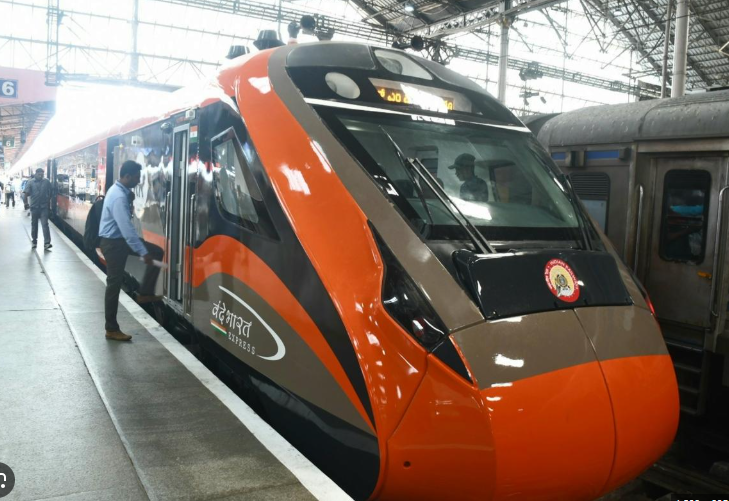
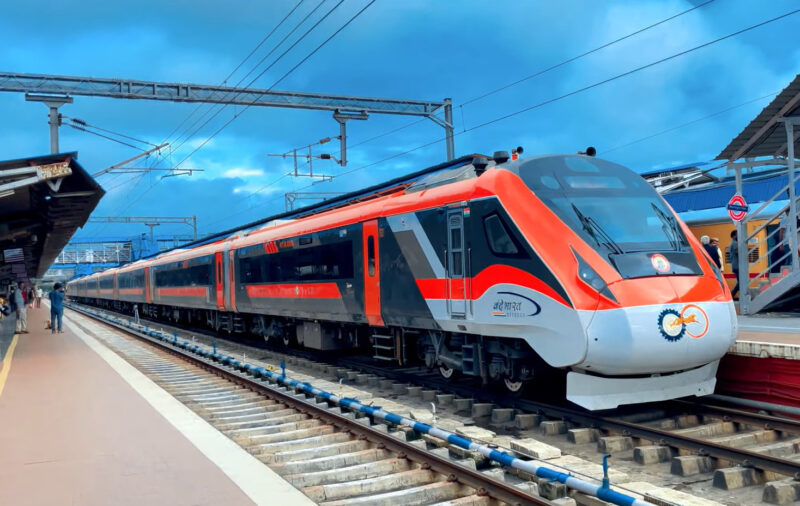
The introduction of modern,tourist-centric train services, such as specialized Vande Bharat or Vista-dome coastal express trains,would instantly transform the entire stretch into a seamless,world-class international tourist circuit.
This connectivity would spark an immediate boom in hospitality investments, generating thousands of jobs in the formal resort,hospitality, tour-operating,and service sectors along the coast,positioning Tamil Nadu and Puducherry as prime spots on the global travel map.
With a newly positioned Tamilnadu and Puducherry Governments along with Union Government and an active local administration in Puducherry Tamilnadu,the political stars are uniquely aligned to dismantle the inertia holding back the coastal rail line.
The project cannot be executed using outdated twentieth-century funding models;it demands an aggressive,modern,cooperative approach.
The Ministry of Railways must collaborate with the respective state governments of Tamil Nadu and Puducherry to form an independent corporate entity or a Tripartite Special Purpose Vehicle.
This structure will insulate the project from day-to-day political shifts and allow for joint equity and shared land acquisition costs.
Furthermore, rather than waiting to acquire the entire 180 -kilometer corridor at once, Southern Railway should deploy a phased strategy, prioritizing construction from Puducherry to Marakkanam and Mamallapuram, where land acquisition is less complicated than the immediate, hyper-developed outskirts of southern Chennai.
To improve the project’s financial internal rate of return, the line must also be linked to major industrial zones, including the upcoming greenfield electronics factories near the Oragadam corridors, the Marakkanam economic zones, and the maritime trade routes of the Karaikal and Cuddalore port ecosystems.
In conclusion,the economic cost of keeping the Chennai–Puducherry railway line frozen is simply too high to ignore.
It is an infrastructure gap that directly impacts the safety of passengers,dampens the earnings of thousands of rural vendors,and artificially restricts a multi-billion rupee tourism economy.
The political leadership at the Centre,in Chennai,and in Puducherry must look past historical friction, acknowledge their shared economic responsibilities,and fast-track land deployment and capital funding for this coastal corridor.
The people of Tamil Nadu and Puducherry have waited for nearly twenty years;it is time to lay down the tracks and let the region’s true economic potential roll forward.