By Desk | Defence & Strategic Affairs
New Delhi:
As the character of warfare undergoes a profound transformation, the second day of Ran Samwad 2026 brought into sharp focus the urgent need for doctrinal evolution and integrated preparedness. The opening session, chaired by Vice Admiral AN Promod, Director General Naval Operations (DGNO), set the tone for a forward-looking dialogue on Doctrinal Adaptations and Training for Multi-Domain Operations (MDO).
At a time when conflicts are no longer confined to physical battlefields, the session explored how kinetic and non-kinetic domains—land, sea, air, cyber, space, and the cognitive spectrum—are increasingly converging, demanding a holistic and synchronized national response.
The Cognitive Battlefield and Civil–Military Fusion
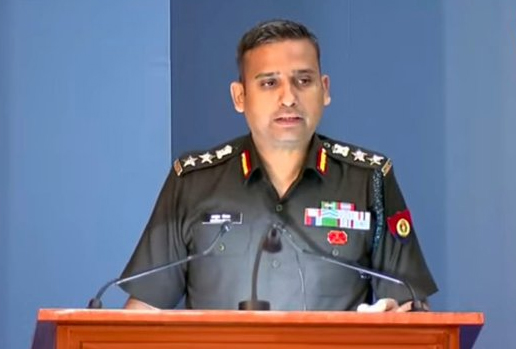
Delivering a thought-provoking address, Col Ankush Goyal delved into the concept of Civil–Military Fusion in the Cognitive Domain, highlighting the emergence of a persistent grey zone where distinctions between war and peace are rapidly dissolving.
He underscored that modern adversaries are leveraging information warfare, perception management, and hybrid tactics to achieve strategic objectives without conventional escalation. In such an environment, he advocated a Whole-of-Nation Approach, integrating civil infrastructure, military capabilities, and national institutions into a cohesive security framework.
Col Goyal emphasized the strategic importance of resilient dual-use infrastructure, including logistics, communication networks, and energy systems. Stressing that “our network is our net worth,” he called for enhanced theatrisation, joint intelligence mechanisms, and national-level war gaming to ensure preparedness against multi-domain threats.
Beyond Jointness: Towards an Indigenous MDO Doctrine
Addressing the doctrinal dimension, Group Captain SP Singh examined the nuanced relationship between Jointness and Multi-Domain Operations. While acknowledging progress in inter-service cooperation, he argued that the future demands a more integrated, technology-driven, and indigenised doctrinal framework.
He proposed a multi-layered operational model that combines:
- Seamless inter-service integration
- Advanced digital and AI-enabled planning systems
- Reforms in human resource management
- Mission-oriented, domain-agnostic command structures
His intervention highlighted that jointness alone is insufficient unless complemented by doctrinal clarity and technological integration tailored to India’s strategic realities.
War Gaming, AI, and the Future of Strategic Decision-Making
Focusing on capability development, Commander Rushwan Razack presented a compelling case for war gaming and simulation as core pillars of MDO readiness. He advocated the phased integration of Artificial Intelligence into operational planning, while maintaining critical human oversight to ensure ethical and strategic control.
Commander Razack also proposed the establishment of a National Wargaming and Data Centre, envisioned as a central hub for simulation-driven strategy, predictive analysis, and joint training across services.
His recommendations underscored the growing importance of data-driven warfare, where decision superiority will increasingly define operational success.
The Road Ahead: From Concept to Capability
The deliberations at Ran Samwad 2026 reinforced a central theme:
future conflicts will be fought across multiple, interconnected domains, requiring agility, integration, and innovation at every level of national security.
From the cognitive battlespace to AI-enabled war gaming, the discussions highlighted the need for:
- Doctrinal clarity aligned with emerging threats
- Institutionalised civil-military synergy
- Investment in advanced technologies and human capital
- Strengthened national coordination mechanisms
As India navigates an increasingly complex security environment, platforms like Ran Samwad play a crucial role in bridging the gap between strategic thought and operational readiness.