Dr.Thomas (Special Correspondent)
The recent court verdict in the case involving Arvind Kejriwal has sent shockwaves across the nation.The judgment is being widely discussed not only for its legal outcome but also for the strong observations reportedly made by the court regarding the functioning of premier investigative agencies such as the Central Bureau of Investigation (CBI) and the Enforcement Directorate (ED).
The court’s critical remarks have raised serious questions about investigative standards, procedural fairness, and accountability.
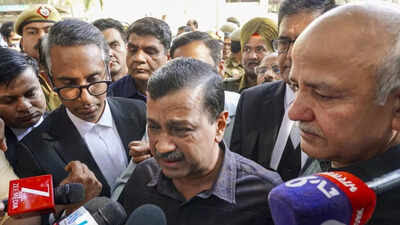
In its detailed judgment, the court reportedly found that several allegations lacked sufficient evidentiary support. As a result, multiple accused persons, including Arvind Kejriwal and Manish Sisodia, were granted relief.
The acquittal of prominent political leaders has intensified the debate over whether the case was driven purely by legal considerations or influenced by political strategy.
Critics argue that investigative agencies are increasingly perceived as instruments used to target opposition leaders rather than as neutral bodies committed solely to uncovering the truth.
One of the most concerning aspects of this case is the prolonged incarceration of the accused. Several leaders spent many months in jail, with repeated bail applications denied before eventual judicial relief. During this period, significant personal hardship was reported.
Manish Sisodia had to approach the court multiple times seeking permission to meet his wife due to her serious health condition.
These circumstances have sparked a broader human rights debate, particularly regarding the constitutional guarantee of personal liberty under Article 21 of the Indian Constitution.
The arrest of a sitting Chief Minister such as Arvind Kejriwal added another layer of political and constitutional complexity.
Many observers have questioned whether the threshold for arrest in such high-profile cases should require stronger and more transparent evidence.
When public figures are detained for extended periods and later acquitted, it raises difficult questions about reputational damage, mental trauma, and the social stigma faced by them and their families. The emotional and psychological impact cannot be easily quantified or reversed.
Another issue highlighted by this case is the role of the media. Extensive coverage often transforms investigations into what is popularly termed a “media trial.”
In many instances, public perception is shaped long before the court delivers its verdict. If the accused are eventually cleared of major charges, the damage to their public image may already be irreversible.
This underlines the need for responsible journalism and adherence to the principle that an accused person is presumed innocent until proven guilty.
The verdict has also renewed calls for institutional reforms. If investigative agencies conduct flawed investigations or proceed without adequate evidence, there must be clear mechanisms for accountability.
Officers who act negligently, misuse authority, or violate due process should face departmental and legal consequences.
Accountability is not about weakening institutions but about strengthening public trust in them. Without consequences for procedural lapses or wrongful actions, confidence in the justice system may erode.
Some legal experts have suggested introducing statutory provisions for compensation in cases where individuals are jailed for extended periods without sufficient evidence or eventual conviction.
Such a framework would reinforce the principle that the power to arrest and prosecute must be exercised responsibly and with utmost care.
At the heart of this debate lies a fundamental question: are investigative agencies functioning independently, or are they vulnerable to political influence?.
In a vibrant democracy, agencies like the Central Bureau of Investigation and the Enforcement Directorate must operate free from political pressure, guided only by evidence and the rule of law.
Similarly, political leaders must be subject to scrutiny if credible allegations arise. The balance between fighting corruption and protecting civil liberties is delicate but essential.
The court’s judgment in this case serves as a reminder that judicial oversight remains a crucial safeguard against potential misuse of power.
If investigations are found to be weak, biased, or procedurally flawed, responsibility must be fixed.
Strengthening accountability mechanisms, ensuring transparency, and safeguarding constitutional rights are necessary steps to prevent similar controversies in the future.
Ultimately, this case is not just about individual leaders; it is about the integrity of democratic institutions. The rule of law demands fairness, impartiality, and responsibility from every authority.
When these principles are upheld, public faith in the justice system remains strong. When they are compromised, the call for reform becomes inevitable.