Sunil Lohan
*Review Availability of Livestock Vaccines;Ensure Adequate Fodder Supply.
*Stored Water May Lead to Spread of Vector-Borne Diseases; Create Public Awareness.
*Use Tankers for Water Supply; Drilling New Borewells Should Be the Last Resort.
*Prevent Health Risks from Contaminated Water; Negligence by Officials Will Not Be Tolerated.
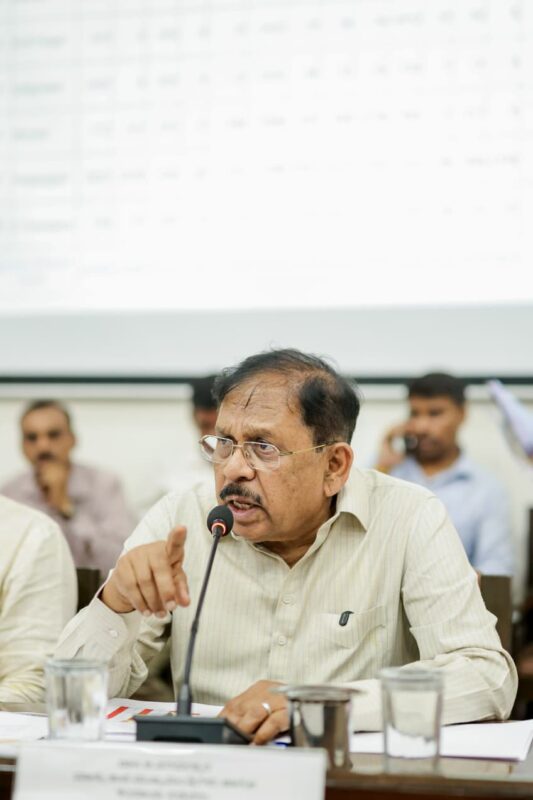
*DyCM Dr.G.Parameshwara Issues Strict Instructions to Officials at Mysuru District Progress Review Meeting.
Deputy Chief Minister and Revenue Minister Dr.G. Parameshwara directed officials to give top priority to ensuring drinking water for people and livestock,while exercising utmost caution in the use of water stored in reservoirs.
“Ensure that livestock receive the required vaccinations on time. Reservoir water must be used judiciously, and no village or urban area should face a shortage of drinking water,”he instructed.
Dr. Parameshwara cautioned that during periods of water scarcity, people tend to store water for longer durations, which could increase the risk of diseases such as dengue and chikungunya.
“This issue must be taken seriously and people should be made aware of the necessary precautions. Task Force and District Disaster Management Authority meetings must also be held regularly,” he said.
He pointed out that cases of illness caused by consumption of contaminated water generally increase during drought years and directed officials to maintain strict vigilance.
“In El Niño years, rainfall is often intermittent, increasing the possibility of sudden floods and lightning incidents. Necessary action must be taken based on weather advisories,” he said.
The Deputy Chief Minister also directed officials to ensure adequate availability of seeds and fertilisers. “If crops fail after sowing due to lack of rain and rainfall resumes later, there could be renewed demand for seeds and fertilisers.
Be prepared for such a situation. If dried-up crops are followed by fresh rainfall, demand may rise suddenly and pressure from farmers could increase. Make all necessary arrangements in advance,” he instructed.
On fodder availability, Dr. Parameshwara said there should be no shortage for livestock.“According to your reports, fodder stocks appear to be low.
Deputy Commissioners and CEOs must get this verified through their teams. Farmers who have access to borewells or other water sources should be encouraged to grow fodder, and steps should be taken to distribute fodder seed kits,” he said.
He reiterated that no habitation should face drinking water scarcity. While supplying water through tankers, officials should also ensure that water is not stored for prolonged periods in a manner that could lead to an increase in dengue and other diseases. Farmers should also be encouraged to cultivate crops that require less water.
“We have provided ₹5 crore to your district for emergency drinking water requirements. Use these funds. Reservoir water should be utilised for drinking purposes.
If borewells dry up, hire private borewells. If the problem persists, deepen existing borewells.
Drilling new borewells should be the last priority. In the meantime, tankers should be used wherever there is an urgent requirement,” he directed.
Dr.Parameshwara said one senior KAS officer has been appointed as the in-charge officer for every taluk across the State and directed the administration to make effective use of them. He also asked the Chief Secretary to closely monitor the matter.
“Going forward, particular attention must be paid to drinking water, fodder and essential vaccinations for livestock.
Maintain adequate stocks of seeds and fertilisers required by farmers and ensure there is no disruption in drinking water supply.
A large number of people from this region migrate in search of employment.With changes also being made to the MGNREGA scheme, available funds and schemes must be effectively utilised to provide employment to people,” he said.