

Pramesh S Jain
The Karnataka Food Safety and Drug Administration has issued a detailed set of guidelines to hotels,dhabas, restaurants and other food service establishments across the State,directing them to strictly comply with food safety,hygiene,storage and temperature-control norms.
The directive comes amid intensified State-wide inspections, during which officials have reportedly found instances of expired food products being stored and poor hygiene conditions at food establishments.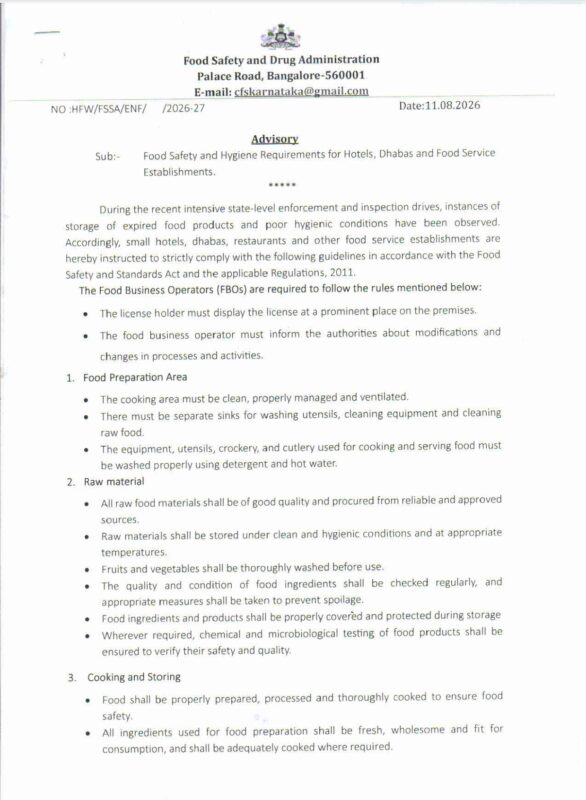
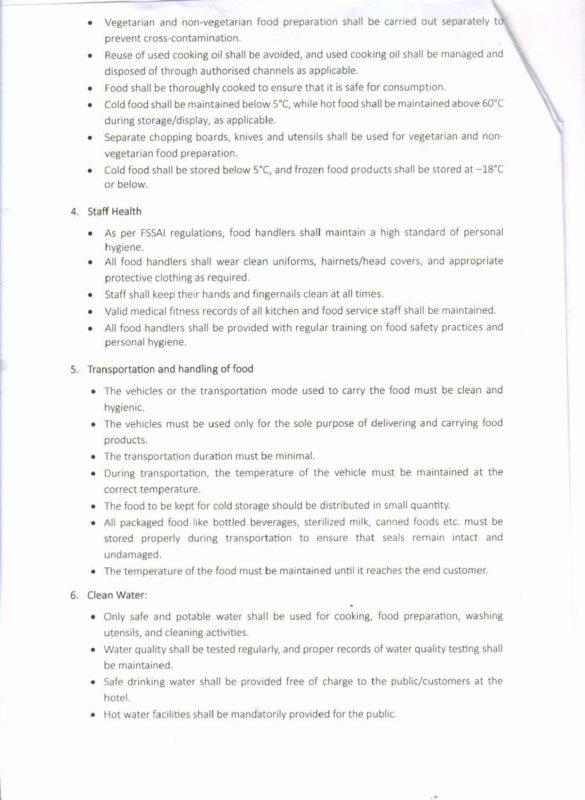
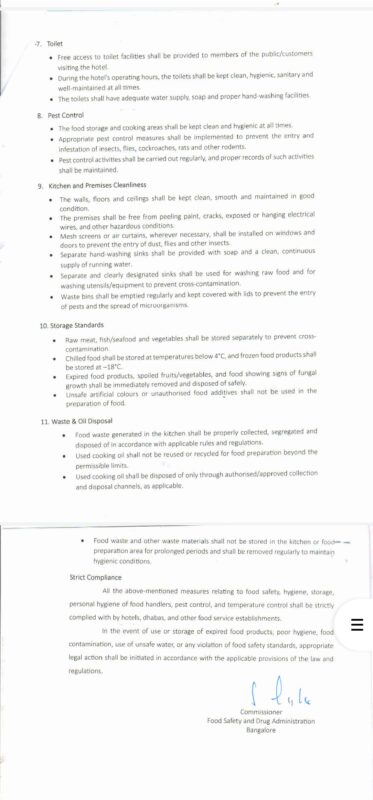
In an official memorandum issued on Tuesday, the Commissioner of Food Safety and Drug Administration directed Food Business Operators (FBOs) to strictly comply with the provisions of the Food Safety and Standards Act and the Food Safety and Standards Rules, 2011.
The department has warned that establishments found storing or using expired food,maintaining poor hygiene, using unsafe water,allowing food contamination or violating food safety standards will face action under the law.
Licence must be displayed:
Food establishments have been directed to prominently display their food business licence at a visible location on their premises.
Any changes or modifications to the nature of the food business,its activities or other details must be reported to the competent authority.
Separate facilities for raw food and utensils :
The kitchen must be maintained in a clean,orderly and adequately ventilated condition.Separate sinks should be provided for washing utensils and equipment and for washing raw food materials.
Utensils,cookware,crockery and cutlery used for food preparation and serving must be properly washed and cleaned using detergent and hot water.
Raw materials must be purchased from reliable sources, stored hygienically at appropriate temperatures and regularly checked for quality.
Fruits and vegetables must be thoroughly washed before use, while food products must be properly covered during storage.
Vegetarian and non-vegetarian food to be separated :
Hotels and restaurants have been instructed to keep vegetarian and non-vegetarian food preparation separate.
Separate cutting boards,knives,utensils and storage containers should be used to prevent cross-contamination.
Food must be properly cooked,while cold food should be maintained below 5°C and hot food above 60°C.Frozen food must be stored at -18°C or below.
The department has also advised establishments to avoid repeated use of cooking oil and ensure that food ingredients are fresh and properly cooked.
Strict hygiene norms for food handlers:
Food handlers must maintain high standards of personal hygiene and wear clean uniforms, hairnets or head covers and,wherever necessary,masks and aprons.
Their fingernails must be kept short and clean.Hotels and food establishments have been directed to maintain valid medical fitness records of kitchen and food-service staff.
The department has also called for trained FoSTaC Food Safety Supervisors to be appointed to monitor daily food safety and hygiene practices.
Regular training must be provided to food handlers on food safety and personal hygiene.
Safe drinking water mandatory:
Only safe and potable water should be used for cooking, food preparation,washing utensils and cleaning.
Establishments have been instructed to periodically test water quality and maintain records of the test results.
Hotels must provide free drinking water to customers and make arrangements for hot water as required.
Free access to toilets:
Hotels have been directed to allow customers to use their toilets free of charge.Toilets must remain clean and hygienic throughout the operating hours and should have adequate water,soap and hand-washing facilities.
Pest control and kitchen maintenance:
Food storage and kitchen areas must be protected against flies,cockroaches,rodents and other pests. Regular pest-control measures should be undertaken and records maintained.
Walls,floors and ceilings must be kept clean, smooth and in good condition.Peeling paint,cracks and exposed or hanging electrical wires must be rectified.
Windows and doors should have mesh screens or air curtains, wherever required, to prevent the entry of dust and flies.
Separate hand-washing sinks equipped with soap and clean running water should be provided.Clearly designated sinks must be used separately for washing raw food and utensils.
Waste bins must be emptied regularly and kept covered to prevent the spread of pests and microorganisms.
Expired and contaminated food to be discarded:
Raw meat,fish and seafood and vegetables must be stored separately to prevent cross-contamination.
Refrigerated food must be maintained below 4°C, while frozen food should be stored at -18°C.
Expired food products,spoiled fruits and vegetables and food showing signs of fungal growth must be disposed of immediately.
The use of unsafe artificial colours or unauthorised food additives in food preparation has been prohibited.
Used cooking oil must be disposed of properly:
Food waste generated in kitchens must be collected and disposed of in accordance with prescribed norms.Used cooking oil must not be reused in an unauthorised manner and should be disposed of only through authorised channels.
Food and other waste must not be allowed to accumulate in kitchen areas for prolonged periods.
The Food Safety and Drug Administration has directed all hotels,dhabas,restaurants and other food service establishments to strictly comply with the prescribed food safety,hygiene,storage,personal hygiene, pest-control and temperature-control requirements.
Officials warned that violations involving expired food, poor hygiene,contaminated food,unsafe water or other breaches of food safety standards would invite legal action under the applicable laws.

