
Pramesh S Jain
In a major relief for the city’s daily commuters,the Bangalore Water Supply and Sewerage Board (BWSSB) has successfully deployed advanced robotic technology to inspect underground pipelines, averting disruptive road excavations at 399 locations over the past six months.
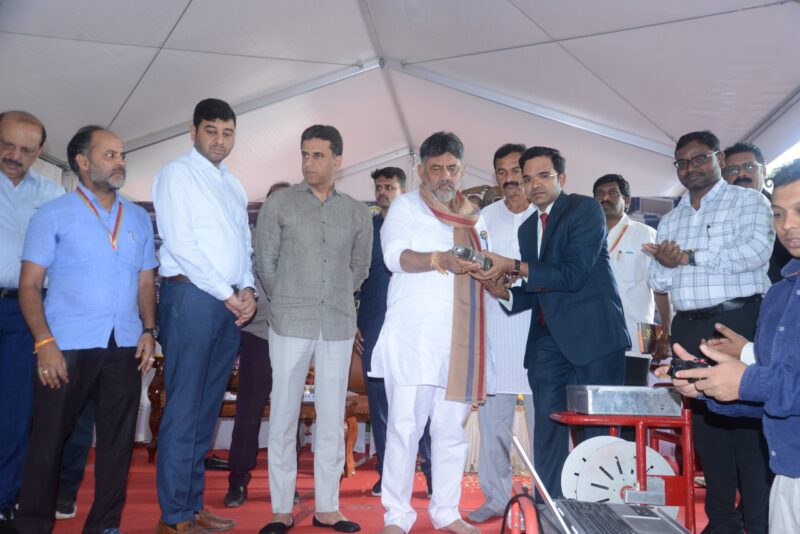
The state-of-the-art initiative,officially launched by Deputy Chief Minister DK.Shivakumar last November, was introduced to address pipeline leaks and sewerage faults without paralyzing city traffic.
By sending robotic units directly into the underground networks, the board surveyed over 32 kilometers of infrastructure,identifying and repairing critical faults without tearing up the asphalt.
“We understand how frustrating road excavations can be for motorists and the public in a metropolis like Bengaluru,”said Dr.Ram Prasath Manohar,Chairman of BWSSB.
“Previously,digging up entire stretches of roads was inevitable to detect pipeline leaks or sewerage faults, leading to massive traffic jams.
Following the directives of the Deputy Chief Minister,we deployed this robotic technology.These machines travel inside the pipelines and accurately pinpoint faults without the need for surface digging,saving the public from immense hardship.”
*Key Operational Milestones (November 2025 – May 2026):
-Extensive Subsurface Survey:BWSSB’s robotic units traversed a staggering 32,661 meters (32.66 km) inside the city’s pipeline network to conduct precise, scientific inspections.
-Pinpoint Fault Detection:The non-invasive inspections accurately identified *394 specific defects,allowing engineers to execute targeted repairs with minimal damage to road infrastructure.
-Rapid Grievance Redressal:Out of 404 public complaints received during this six-month window,the board successfully resolved 399 cases.The remaining five complaints are currently being fast-tracked on a priority basis.
Reaffirming the board’s shift toward citizen-centric administration,Dr.Manohar added,BWSSB is committed to providing excellent public service while ensuring that the city’s core infrastructure and smooth traffic flow remain undisturbed.
We will continue to scale up the use of such modern, non-invasive technologies in our daily operations.”

