
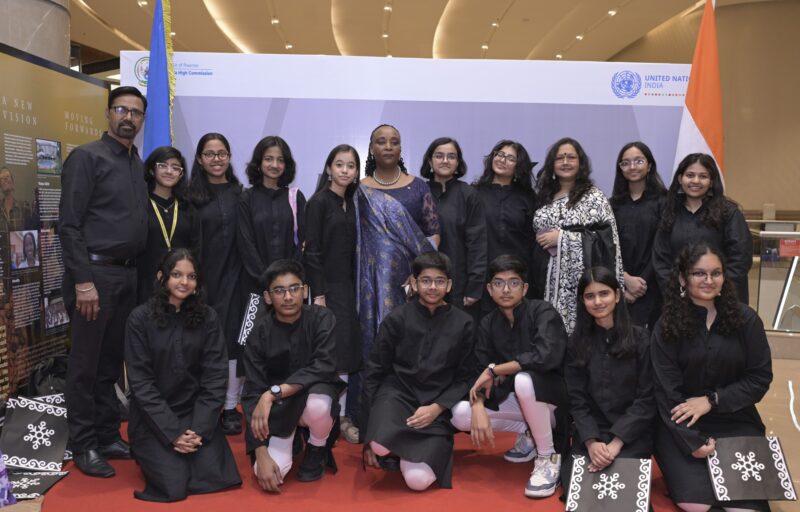
Rwandans and friends of Rwanda came together in New Delhi to mark the 32nd Commemoration of the 1994 Genocide against the Tutsi in Rwanda (Kwibuka32). The event was organised by the High Commission of Rwanda in India in collaboration with the United Nations in India at Bharat Mandapam, featuring both morning and evening sessions.
Students Spread Message of Peace Through Art
The commemoration began with a morning exhibition attended by around 450 students and educators from schools across Delhi-NCR. Through powerful artworks, students depicted the horrors of the genocide while promoting messages of peace, unity, and humanity.
Addressing the gathering, Rwanda’s High Commissioner to India, Mrs. Jacqueline Mukangira, appreciated the collaboration with the United Nations and praised the students for their thoughtful research and creative expression. She encouraged young minds to uphold values of tolerance, harmony, human rights, and non-discrimination.
She also highlighted the planned nature of the genocide and spoke about Rwanda’s journey of healing, unity, and transformation over the past three decades.
Darrin Farrant, Director of the United Nations Information Centre for India and Bhutan, read out the message of the UN Secretary-General on the International Day of Reflection.
Global Leaders and Diplomats Join Evening Remembrance
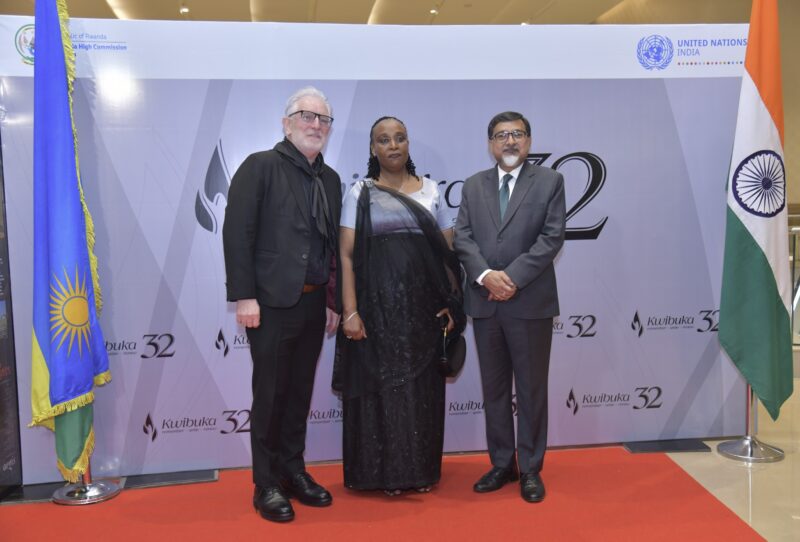
The evening session witnessed participation from over 650 attendees, including government officials, diplomats, scholars, business leaders, civil society members, media representatives, and the Rwandan diaspora.
Delivering the keynote address, H.E. Ambassador Kevin Kelly, Ambassador of Ireland to India, reflected on his experience in Rwanda after the genocide. He lauded the country’s resilience and progress, calling it a powerful example of rebuilding a nation beyond its tragic past.
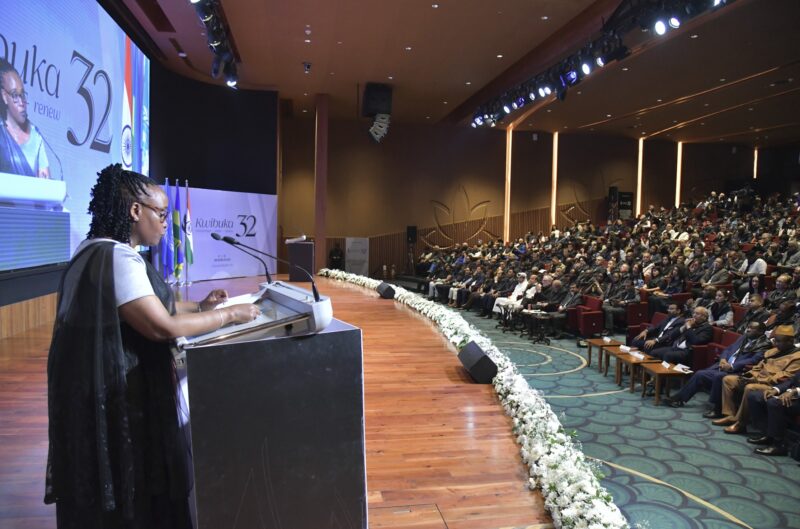
In her address, High Commissioner Mukangira expressed gratitude to the Government of India for its continued support and strong bilateral ties. She emphasised that the commemoration honours the victims, supports survivors, and recognises those who contributed to ending the atrocities.
She underlined that the genocide was a state-sponsored and systematically planned campaign driven by hate ideology, and called upon the international community to uphold the principle of “Never Again” with genuine commitment. She also raised concerns about the persistence of genocidal ideology in parts of Africa and stressed the need for global vigilance, justice, and action against hate speech.
India Reaffirms Support, UN Highlights Global Responsibility
Shri Sudhakar Dalela, Secretary (Economic Relations), Ministry of External Affairs, Government of India, attended as Chief Guest. He praised the growing India-Rwanda partnership and highlighted recent high-level engagements, including the India-Rwanda Joint Commission Meeting and Raisina Dialogue 2026.
Stefan Priesner, UN Resident Coordinator in India, described Rwanda as a remarkable example of resilience and progress, while reiterating the UN’s message on remembrance and prevention of such atrocities.
Tributes Through Silence, Art and Performance
The solemn evening included a candle-lighting ceremony and a minute of silence in memory of the victims. The programme also featured a documentary screening, a powerful student drama by KIET Group of Institutions, and a musical tribute “Mudaheranwa” performed by students of Bal Bharati Public School, Noida.
The event concluded with a collective call for remembrance, unity, and a renewed global commitment to prevent genocide and uphold human dignity.


