
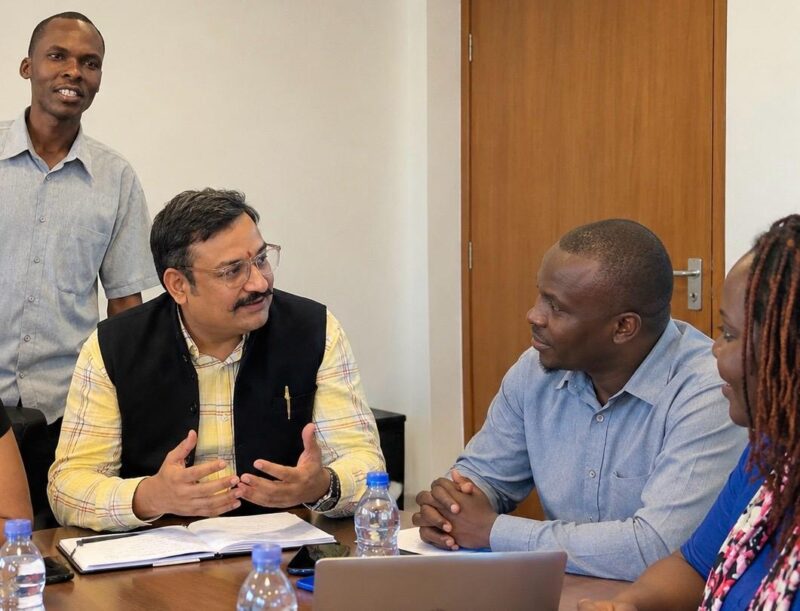
Meetings with Kenyan importers and exporters highlight opportunities in freight forwarding, pulse shipments and cross-border supply chains connecting India with East Africa
Nairobi, Kenya: Dr. Vipin Gaur, accompanied by his team, has been engaging with importers, exporters and business representatives in Kenya to assess trade flows between India and East Africa and identify new opportunities in international logistics, freight forwarding and supply-chain management.
The discussions focused on understanding the movement of goods between India and African markets, identifying high-potential commodities and examining how logistics companies can support growing commercial connections between the two regions.
During these interactions, the team observed that entrepreneurs of Indian origin play a significant role in import operations and commercial networks in Kenya. Their established business relationships, trading experience and connections with international markets present opportunities for developing stronger links between Indian suppliers, African buyers and logistics service providers.
India–Kenya Trade: A Strong Foundation for Growth
India and Kenya maintain significant commercial relations across multiple sectors, including pharmaceuticals, petroleum products, machinery, agricultural commodities, chemicals and manufactured goods.
According to the High Commission of India’s published trade figures, bilateral trade between India and Kenya reached approximately US$4.31 billion in the financial year 2025–26. India’s exports to Kenya were valued at approximately US$4.01 billion, while imports from Kenya stood at around US$290 million. <Cite refs={[“turn683377search0″,”turn683377search6”]}/>
These figures underline the importance of efficient logistics infrastructure, reliable shipping services and effective customs procedures in facilitating trade between the two countries.
Dr. Gaur’s discussions with local traders aim to identify practical opportunities within these established trade flows and explore additional commercial connections across the wider East African region.
Pulses Trade Creates Opportunities for Freight Forwarding
One of the areas highlighted during the discussions was the regional trade in pulses, including different varieties of beans and other leguminous crops.
According to the market observations shared by the team, pulses sourced from countries including Uganda, Tanzania, Kenya and Sudan are part of the wider regional supply network serving Indian buyers. The scale, origin and commercial viability of individual shipments vary by commodity and market conditions.
India is a major consumer and importer of pulses, creating potential opportunities for exporters and logistics companies capable of managing agricultural cargo, coordinating shipments and supporting the movement of goods from origin markets to Indian destinations.
Such trade requires dependable freight forwarding, appropriate cargo handling, documentation, customs clearance and coordination between suppliers, traders, shipping lines and buyers.
For logistics providers, these requirements create opportunities to offer integrated solutions that connect agricultural producers and exporters in East Africa with importers and distribution networks in India.
Kenya’s Strategic Position in East African Logistics
Kenya occupies an important position in regional commerce, with the Port of Mombasa serving as a major maritime gateway for Kenya and several neighbouring land-linked countries.
Its established transport, shipping and distribution networks make it an important location for coordinating regional cargo movements. Uganda and other neighbouring markets also rely on regional transport corridors to connect with international shipping routes.
For freight forwarding companies, this creates opportunities to develop coordinated services covering cargo collection, inland transportation, port handling, ocean freight, customs clearance and onward delivery.
The team identified Kenya’s position within the East African trading network as an important consideration when assessing future logistics opportunities. Further market research and discussions with traders will help establish the most commercially viable routes, commodities and customer segments.
Vipin Gaur Said: East Africa Offers Significant Logistics Potential
Speaking about the market assessment, Dr. Vipin Gaur said, “My team and I are meeting importers, exporters and business representatives in Kenya to understand the actual movement of goods between India and East Africa. Our objective is to identify practical opportunities, understand the needs of traders and develop stronger connections between businesses in the two regions.”
He added, “East Africa offers considerable potential for freight forwarding and international logistics. Trade in agricultural commodities, including different varieties of pulses, presents opportunities to connect regional exporters with Indian importers. Kenya’s strategic position and established maritime connections make it an important market to study as we explore these opportunities.”
Dr. Gaur further emphasised that successful logistics operations depend on understanding local markets, building relationships with reliable trading partners and providing efficient, transparent and cost-effective transportation solutions.
Building Stronger India–Africa Commercial Connections
The ongoing discussions form part of a broader effort to understand East African trade opportunities and develop relationships with businesses involved in imports, exports and international cargo movement.
By engaging directly with traders and examining commodity-specific supply chains, the team aims to identify opportunities for logistics partnerships that can support businesses operating between India and African markets.
As bilateral trade expands and regional supply chains evolve, freight forwarding companies with a strong understanding of local requirements and international shipping networks can play an important role in connecting producers, exporters, importers and end markets.
The market assessment led by Dr. Vipin Gaur highlights the potential for stronger India–East Africa trade connectivity, with Kenya offering an important base from which to explore regional freight forwarding and agricultural cargo opportunities.


