
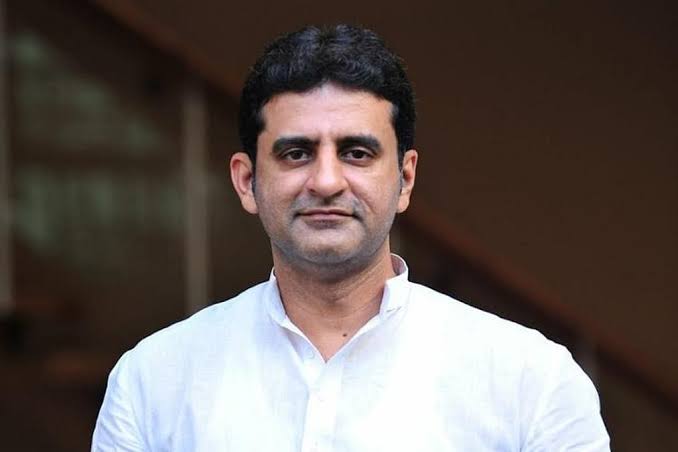
Binish Thomas (Special Correspondent)
A political journey shaped by youth leadership, grassroots connections and a commitment to inclusive politics
In Karnataka’s diverse and competitive political landscape, Rizwan Arshad has emerged as a prominent Congress leader whose journey reflects a steady rise from student and youth politics to the state legislature and the Karnataka Cabinet.
Currently serving as Karnataka’s Minister for Food, Civil Supplies and Consumer Affairs, Rizwan Arshad represents the Shivajinagar Assembly constituency in Bengaluru.
The Food and Civil Supplies Department is one of the most important departments connected directly with the daily lives of ordinary citizens, particularly through food security, essential commodities and the public distribution system.
In August 2026, he was also appointed as the district in-charge minister for Udupi.
From Student Politics to Youth Leadership :
Rizwan Arshad’s political journey began with the National Students’ Union of India (NSUI) during his student years in Mysuru.
He later rose through the ranks of the Youth Congress, serving in important organisational positions at both the state and national levels.
One of the significant milestones in his political career came in 2011, when he became the first elected president of the Karnataka Pradesh Youth Congress.
His rise through the organisation gave him extensive experience in working with young political workers and building leadership at the grassroots level.
His political journey demonstrates an important principle:
Committed workers who begin at the grassroots can rise to major positions through organisational experience, dedication and public engagement.
A Strong Electoral Journey :
Rizwan Arshad entered the Karnataka Legislative Council after being elected by MLAs in 2016.
He subsequently contested the Shivajinagar Assembly by-election in December 2019 and won, marking his entry into the Karnataka Legislative Assembly.
He retained the Shivajinagar constituency in the 2023 Karnataka Assembly election, strengthening his position as an important Congress leader from Bengaluru.
Before his Assembly victories, he had also contested the Bengaluru Central Lok Sabha constituency in the 2014 and 2019 general elections.
Although he was unsuccessful in those contests, his continued political journey reflects persistence and long-term commitment to public life.
A Minister Connected to the Common People :
The Food, Civil Supplies and Consumer Affairs portfolio is particularly important because its policies directly affect ordinary families. Food security and access to essential commodities are matters that concern millions of people.
For this reason, the role of the minister heading this department carries significant public responsibility.
Rizwan Arshad’s supporters believe that public policy in this sector must remain focused on the interests of common citizens and economically vulnerable sections of society.
His political career has been built largely through organisational work and direct engagement with people, which has helped him maintain a strong connection with party workers and constituents.
Secular Politics Beyond Community Identity :
One of the qualities frequently highlighted by his supporters is his commitment to secular and inclusive politics.
Rizwan Arshad comes from the Muslim community, but his political identity has not been confined to one religious or social group.
He has worked within the broader framework of the Indian National Congress and its principles of secularism, social harmony and inclusiveness.
In a diverse state such as Karnataka, political leaders have an important responsibility to build bridges between communities.
A leader should be accessible to people irrespective of religion, caste, language or economic background.
This is the kind of political approach that many of Rizwan Arshad’s supporters associate with him: representing all citizens rather than limiting public service to any one community.
Respect for Grassroots Party Workers :
One of the biggest challenges in modern politics is maintaining a connection with grassroots workers after attaining power and position.
It is often said that political parties are built not only by prominent leaders but by thousands of ordinary workers who spend years strengthening the organisation.
These workers campaign during elections, organise local activities and remain connected to people at the grassroots.
Rizwan Arshad’s political background in the NSUI and Youth Congress has given him a close understanding of the importance of party workers.
His supporters often describe him as a leader who remains accessible to ordinary Congress workers and recognises the contribution of people who have worked for the party without wealth, influence or political family connections.
This is an important quality for any political leader. When ordinary workers believe that dedication and hard work can lead to greater opportunities, it strengthens the democratic culture within a political organisation.
Fairness and Integrity :
When he was the party in-charge for Kerala, he served as an observer there.
Corruption allegations were raised against a Youth Congress in-charge in that state.
Rizwan reported the matter to the party high command, and the party took disciplinary action. Those who know his work say he does not let personal bias affect his decisions.
During his time as in-charge of Kerala, he took some exceptional decisions. He encouraged the party to field an ordinary party worker, a woman from a backward community, as a candidate. She went on to be given a ministerial berth
Accessibility Is a Measure of Leadership :
Political power should not create a wall between elected representatives and the people. A public representative’s true strength is often measured by how easily an ordinary citizen or party worker can approach him.
People from his constituency and political colleagues have often described Rizwan Arshad as a leader who remains connected with people at the personal and community level.
In today’s political environment, influential businessmen and prominent personalities can often find easy access to powerful leaders.
However, the real test of public leadership is whether an ordinary party worker or citizen receives the same respect and attention.
A political leader who gives importance to grassroots workers and ordinary constituents helps maintain the original spirit of democratic politics.
From Organisational Politics to the Cabinet :
Rizwan Arshad’s elevation to the Karnataka Cabinet in 2026 marked another important stage in his political career.
His journey from student politics to Youth Congress leadership, the Legislative Council, the Karnataka Assembly and finally the state Cabinet represents a gradual progression through different levels of public and political life.
His career also demonstrates the value of organisational experience. Leaders who have worked at the grassroots often understand the concerns of ordinary workers and citizens because they have spent years within the political organisation before reaching positions of greater authority.
The Kind of Politics India Needs :
India’s democracy needs leaders who can rise above divisions and remain connected to ordinary people.
Political leadership should not be based solely on wealth, family background or social influence. There must always be room for committed workers to rise through dedication and service.
Rizwan Arshad’s political journey offers an example of a leader who rose through student and youth politics and continued his journey through organisational and electoral responsibilities.
His supporters see in him the qualities of a modern political leader: accessibility, secularism, organisational experience and respect for grassroots workers.
The true value of a political leader should not be measured only by the office he holds. It should also be measured by whether an ordinary citizen can approach him, whether a party worker is treated with respect and whether the leader remains committed to serving people from every section of society.
In that sense, Rizwan Arshad’s journey from a student activist to a Cabinet Minister is not only a story of political success.
It is also a reminder that politics remains meaningful when leaders stay connected to the people who form the foundation of democracy.
Power may bring a position, but public service and accessibility are what create a lasting political legacy.


