
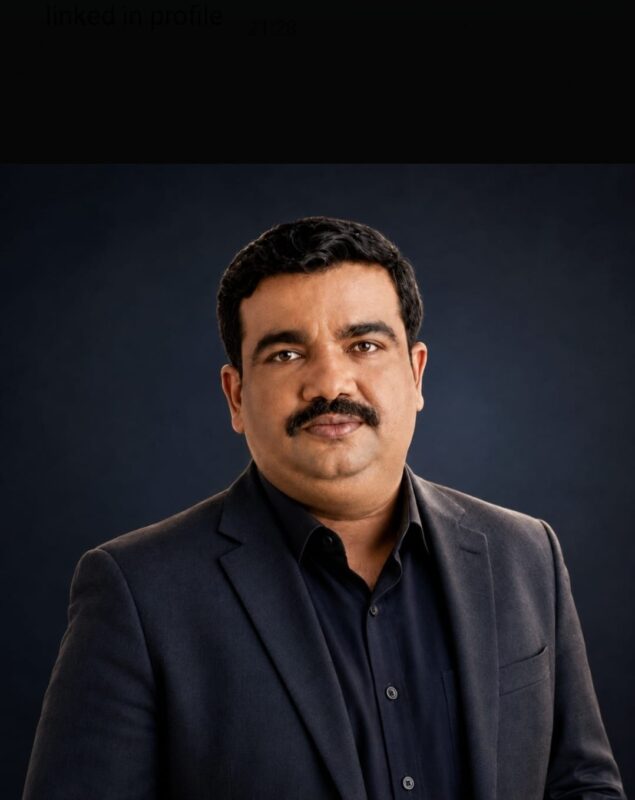
Pramesh S Jain
To many in Bengaluru, particularly in and around Ulsoor and Gowthamapura, he is remembered for something much simpler – showing up when people needed help.
A Political Journey That Began on the Ground
Binish’s political journey began much earlier, through the National Students’ Union of India (NSUI) and later the Youth Congress.
He served as NSUI State Secretary and subsequently as Youth Congress State General Secretary in Karnataka. But his political work was never confined to party meetings or organizational positions.
The Shantinagar constituency of Bengaluru was one of the defining chapters of his early political career.
Shantinagar was then considered a strong BJP area, where even the MLA and Corporator were from the BJP.
Through sustained grassroots work, he helped rebuild the Congress presence in the constituency.
Whether viewed through the lens of party politics or grassroots organization, the period established a pattern that would continue throughout his career: his emphasis was on building relationships directly with people rather than relying entirely on political hierarchy.
Today, when the children of prominent politicians lose election after election, often forfeiting their deposits, Binish is a person who has proven that wherever he contests, a 100% victory is guaranteed.
Gowthamapura: Where Politics Became Social Work
Perhaps the most important chapter in Binish’s Bengaluru story began in Gowthamapura, near Ulsoor in 2006.
He believed that public service should be measured by what happens at the ground level.
Binish helped children with school fees, supported an engineering student’s education, organized medical camps, provided computers and helped unemployed young people with auto rickshaws.
He also helped with housing, water connections and medical treatment. His dedicated social work among poor families in Gowthamapura was covered in a 2016 report by The New Indian Express.
Football also became part of his work in the locality. He provided football kits and supported children who were interested in the sport.
The report similarly noted his efforts to develop football facilities and bring prominent footballers to Gowthamapura.
For Binish Thomas, however, the significance of Gowthamapura goes beyond individual acts of assistance.
Some of the children who benefited from his support eventually built successful careers, while some families that once struggled with basic expenses were able to move forward.
Some children in the locality were named Binish after him, which illustrates the personal relationship he developed with the community.
It was only in 2014 that Narendra Modi introduced a policy requiring leaders to adopt villages. But Binish had already demonstrated this back in 2006 by adopting Gowthamapuram.
The Auto Drivers Who Put His Name on Their Union
One of the more unusual aspects of Thomas’s public life is his relationship with Bengaluru’s auto-rickshaw drivers.
An auto-rickshaw drivers’ association was created in his honour: the Binish Thomas Fans Welfare Auto Drivers Union.
The association operates in Bengaluru and its members have organized blood-donation activities around his birthday and other occasions.
The story is significant because it reflects the kind of support Binish says he values most: not support generated through an official political appointment, but loyalty built through personal interaction.
His argument is straightforward – people who have seen his work should be able to decide for themselves whether they want to stand with him.
A Political Worker and A Journalist :
Alongside his political work, Binish is an accomplished journalist with experience spanning investigative journalism, public policy, and international relations.
His work has increasingly moved beyond local politics into international affairs.
He has written about geopolitics, international conflicts, media freedom and China’s growing influence in developing countries.
That transition from local politics to international journalism is perhaps the most striking part of his career.
The man who once worked in the lanes of Gowthamapura eventually began writing about issues stretching from Africa to Asia and the Middle East.
Taking on China’s Growing Influence in Africa
One of the subjects Binish has pursued most aggressively is China’s expanding economic and geopolitical influence in Africa.
While working as Africa Director for a UN-affiliated organization, he became increasingly concerned about Chinese infrastructure projects, lending and growing strategic influence across African countries.
He stood up against China without fear, facing them head-on without any external backing.
Through his articles, he exposed China’s activities and attempted to create greater awareness among African audiences about the long-term implications of excessive economic dependence.
A 2024 report similarly described his work on Chinese debt diplomacy in Africa and his efforts to raise awareness among African leaders and journalists.
This work brought opposition and criticism, including pressure connected to his writing on China.
According to him, economic relationships can eventually become geopolitical relationships – particularly when infrastructure, finance and strategic interests begin moving together.
A Journalist Who Stands with Journalists :
Journalist protection has become another defining part of Thomas’s public identity.
He is an advocate for a Journalist Protection Bill and has been involved in journalist safety and press-freedom issues. In Bengaluru, he publicly intervened in cases involving alleged mistreatment of journalists.
In June 2026, Binish demanded action against a police Assistant Sub-Inspector over alleged misconduct involving journalists and called for stronger safeguards for media personnel.
His stated philosophy is simple: when a journalist faces trouble while doing their job, other journalists should not remain silent. That belief eventually became institutional as well.
From Bengaluru to the International Stage
Binish’s international profile has continued to expand.
In April 2026, he was honoured at the Tehelka Samvad event in Lucknow for his contribution to geopolitical journalism.
He received the Tehelka Samman for Best Geopolitics Journalism.
He has additionally spoken about his writings on the Israel-Hamas conflict. Ten days after Hamas attacked Israel, the then US president, Joe Biden, read Binish’s article before the media.
His articles carried immense weight, which was widely reported across several Indian media outlets.
So, Who Is Binish Thomas?
The answer depends on where one begins the story.
Begin in Shantinagar, and he is a political worker who says he helped rebuild a party’s grassroots presence.
Begin in Gowthamapura, and he is the man associated with helping children continue their education, supporting families, encouraging football and assisting people with medical and livelihood needs.
Look at Bengaluru’s auto drivers, and his story becomes one of a public figure who says he earned a following outside conventional political structure.
Look at his journalism, and the picture changes again – investigative reporting, geopolitics, China, Africa, journalist protection and international affairs.
And look at his recent recognition, and he is increasingly presenting himself as a journalist operating on an international stage.
Perhaps that is what makes Binish Thomas’s story different. It is not a move from one career to another – student politics into party work, party work into the social work at Gowthamapura, and, in parallel, a body of writing that took him from local concerns to Africa, China and the Middle East.
For Binish, the thread connecting all these chapters remains the same: people first, institutions second.


