
Dr.Thomas (Special Correspondent)
A recent judgment by a Tamil Nadu court has drawn national attention, reigniting discussions about custodial violence and police accountability in India.
The case relates to the deaths of a father and son in Sathankulam during the COVID-19 lockdown, an incident that shocked the entire country.
The victims were P. Jeyaraj (59) and his son J. Bennix (31), residents of Sathankulam in Thoothukudi district, Tamil Nadu.
According to case records, the father and son, who owned a mobile phone shop, were allegedly detained by police officials on June 19, 2020, for keeping their shop open beyond permitted hours during pandemic restrictions.
They were taken to Sathankulam Police Station, where they reportedly underwent severe custodial torture.
The next day, both were remanded to judicial custody and sent to Kovilpatti Sub-Jail. Soon after, Bennix died on June 22, 2020, and Jeyaraj died on June 23, 2020.
The post-mortem examinations reportedly revealed multiple injuries consistent with brutal physical torture, which intensified public outrage and led to a detailed investigation.
After a prolonged trial, the First Additional District and Sessions Court, Madurai delivered a strong verdict, awarding the death penalty to the police officials involved.
The judgment has been widely described as historic, as it emphasizes that law enforcement officers cannot misuse their authority with impunity.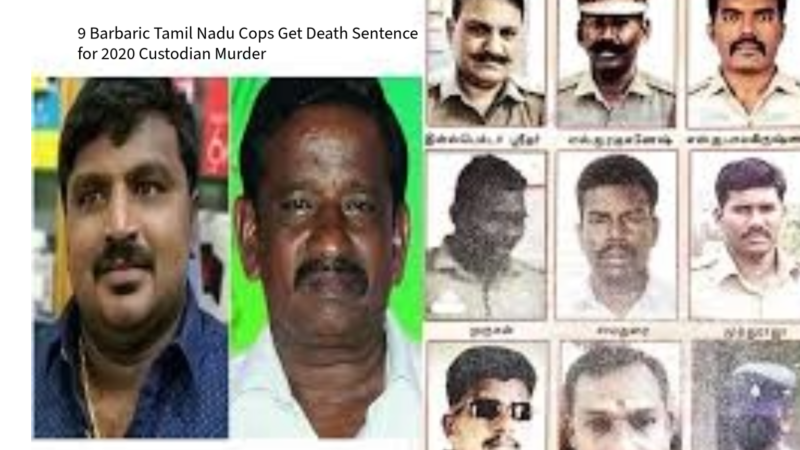
During the course of the investigation, allegations also surfaced that one of the officers had demanded a luxury mobile phone as a bribe, promising that the shop could remain open during the lockdown.
The father and son allegedly refused to comply, which, according to claims presented during the case, triggered the confrontation that ultimately led to their arrest.
This judgment has triggered a broader debate on the role and responsibilities of police personnel. Police officers are entrusted with protecting citizens and upholding their dignity.
However, incidents like custodial violence raise serious concerns about misuse of power. Critics argue that wearing a uniform should not grant immunity from accountability, and that any abuse of authority must be dealt with firmly.
Similar Incident: Nedumkandam Custodial Death
A similar custodial death occurred in Nedumkandam, Idukki district, Kerala, in 2019.
The victim, S. Rajkumar, a scrap dealer, was taken into custody by Nedumkandam Police Station in connection with a financial dispute. He was allegedly subjected to brutal custodial torture for several days.
Rajkumar died on June 21, 2019, shortly after being produced before the Judicial First Class Magistrate Court, Nedumkandam.
The post-mortem report revealed numerous injuries across his body, indicating severe assault. The incident triggered widespread protests across Kerala, and several police officials were suspended and later arrested. The investigation was later handed over to the Crime Branch.
India has witnessed several similar incidents in the past. Cases of alleged illegal detention, custodial torture, and false accusations have periodically surfaced across different states.
In many instances, victims or their families hesitate to file complaints due to fear of retaliation. Human rights organizations have repeatedly pointed out that custodial violence often goes underreported for this reason.
There have also been concerns about false cases being registered against individuals. Legal experts suggest that if a court acquits someone due to lack of evidence or false allegations, there should be mechanisms to examine accountability of officials who filed such cases.
They argue that wrongful accusations can damage a person’s reputation, livelihood, and mental health.
Reports from metropolitan cities, including Bengaluru, have occasionally highlighted allegations of illegal custody, where individuals were reportedly detained for extended periods without proper procedures.
Although such cases are not universal, they contribute to public anxiety regarding misuse of authority.
The Tamil Nadu judgment is being seen as a strong message that custodial violence will not be tolerated. Observers say it reinforces the principle that protectors cannot become perpetrators.
They also emphasize the need for systemic reforms, including better training, stricter oversight, use of surveillance in police stations, and faster disciplinary action against misconduct.
Ultimately, the case has reignited a national conversation about balancing police powers with citizens’ rights.
As India continues to strengthen its legal and democratic institutions, many believe that accountability, transparency, and respect for human dignity must remain central to law enforcement practices.

