
Dr.Thomas (Special Correspondent)
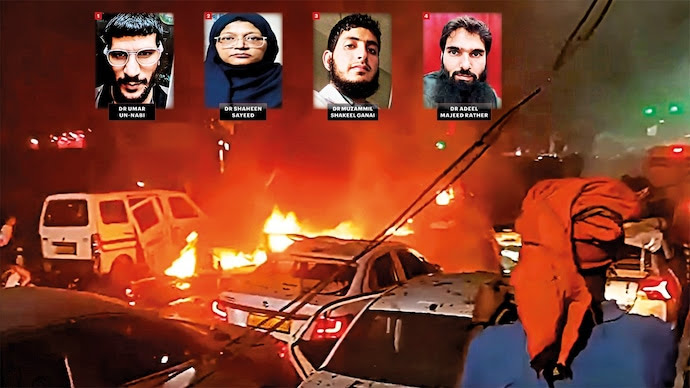
New Delhi:India was recently shaken by the Delhi blast, an incident that security officials have described as a potential act of white-collar terrorism—a form of threat executed through influence, financial power, and organized pressure networks rather than conventional violence.
The incident has triggered renewed debate on hidden groups operating within India and abroad who may undermine public order and institutional stability.
White-collar terrorism refers to individuals or networks that appear to be ordinary professionals—business owners, association leaders, or community figures—but allegedly use their positions to exert undue influence.
Because they operate under legal and social cover, identifying their activities becomes significantly more complex.
One case drawing attention involves an all-India association formed for paramedical students and employees.Established to support job security, the organisation spread rapidly across India.
However, several incidents connected to its functioning have raised concerns regarding its leadership and financial dealings.
In Kerala, hospital operations were disrupted when staff linked to the association launched a sudden strike.
Notably, hospitals managed by particular community groups were reportedly left untouched, prompting speculation over selective targeting and the motives behind the action.
The association’s leadership has also become a subject of scrutiny. Its chief, originally from India but reportedly settled in Qatar, is said to maintain strong overseas contacts.
Questions have emerged about the off-shore earnings and financial channels connected to the organisation, with critics pointing to a rapid rise in wealth that remains unexplained.
Another senior figure in the movement previously faced a serious criminal allegation in India—a case that was reportedly settled outside court—intensifying concerns over the credibility of those directing the association.
Additionally, individuals linked to the organisation are alleged to be involved in suspicious land dealings, off-shore financial transactions, and facilitation of college admissions.
Their activities reportedly extend into Karnataka, where several private colleges are owned or influenced by political figures.
Observers claim that these political connections may provide the group with informal protection, enabling them to operate without sufficient accountability.
Although many of these allegations remain unverified, experts warn that such patterns resemble white-collar influence networks capable of destabilizing institutions without using overt violence.
Analysts argue that the Delhi blast underscores the need to examine these networks more closely, both within India and in their international linkages.
Authorities stress that heightened scrutiny, regulatory oversight, and transparency are essential to ensure that professional associations and pressure groups operate legally and ethically.


