Binish Thomas (Special Correspondent)
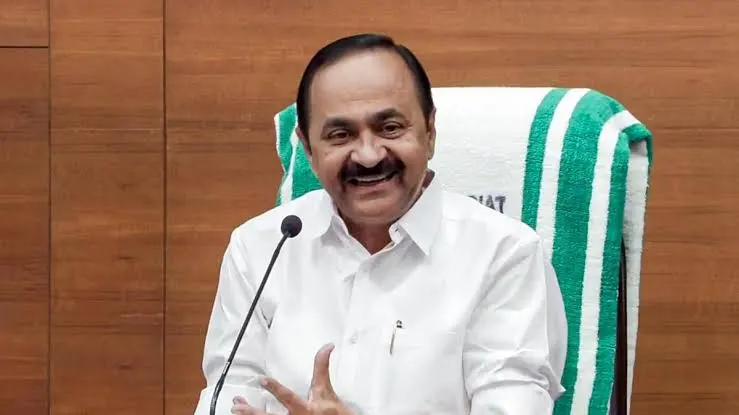
India’s No.1 Chief minister is V.D. Satheesan: The CM Without the VIP Wall
V.D. Satheesan is, in my view, one of the most accessible Chief Ministers in India today.
There is no heavy protocol or imposing wall of security separating him from ordinary people who come to meet him with petitions.
I recently visited the Chief Minister’s office and saw this firsthand.
A large crowd was waiting outside. When I asked why they were there, I was told that they had come to meet Chief Minister Satheesan personally and submit their petitions.
When he arrived, he did not simply ask them to come upstairs. Many of those waiting were physically challenged and unable to climb the stairs to his cabin. Several were in wheelchairs.
Satheesan came downstairs to meet them, spoke to those who were waiting, and then went to his cabin to meet others individually.
I have known Satheesan since his NSUI and Youth Congress days. One senior leader once shared with me the story of Satheesan’s early rise in student politics, including the internal opposition to his appointment as NSUI president.
Satheesan nevertheless went on to become the national secretary of NSUI. His public life was built around direct interaction with ordinary people, and that approach has remained visible throughout his political career.
His manner of dealing with people has generally been polite and approachable. He has not, in my experience, displayed the kind of arrogance that people sometimes associate with senior political leaders.
There was also considerable public discussion about his leadership after the 2026 Assembly election. Even before the Congress leadership formally settled the question of who would become Chief Minister, supporters took to the streets demanding that Satheesan be given the responsibility.
The public demonstrations became one indication of the support he had developed among sections of ordinary voters and party workers.
Satheesan’s political forecasting has also become an important part of his public image. Ahead of the 2026 Assembly election, he publicly predicted that the UDF would cross 100 seats and that at least a dozen ministers in the outgoing government would lose their constituencies.
Supporters subsequently pointed to the election results as confirmation of those predictions.
His earlier political assessments have also been cited by supporters as evidence of a consistent understanding of grassroots political sentiment.
Satheesan himself has attributed this ability not to any special political instinct, but to his direct engagement with voters and his understanding of developments at the grassroots.
Another issue that has sometimes generated controversy is his position on the role of religious institutions in politics.
Satheesan has argued that churches and religious leaders should not function as political vote banks or become involved in political bargaining.
Some interpreted those remarks as being directed against churches themselves.
However, his later public references to Christianity and the Bible demonstrated that his criticism was directed at the political involvement of religious leadership rather than at faith itself.
I am writing this from the perspective of an investigative journalist who has observed political leaders over many years.
In my experience, one of the qualities that distinguishes V.D. Satheesan is his willingness to meet party workers and ordinary citizens directly.
During my recent meeting with him, one of the people accompanying me was a CPI leader. Satheesan welcomed him warmly and asked him to sit down.
Afterward, the man told me that he had been associated with the Communist Party for around four decades and had never had an opportunity to meet the previous Chief Minister personally.
He was genuinely surprised by the manner in which Satheesan received him.
That interaction, to me, illustrated something important about Satheesan’s approach to politics: political differences do not necessarily have to become personal barriers.
Whether one agrees with his politics or not, his accessibility, grassroots engagement and willingness to interact across political lines are qualities worth examining.
For me, the most striking image remains that of a Chief Minister coming downstairs to meet people in wheelchairs rather than asking them to climb the stairs to reach him.
That is what I mean by
“the CM without the VIP wall.”